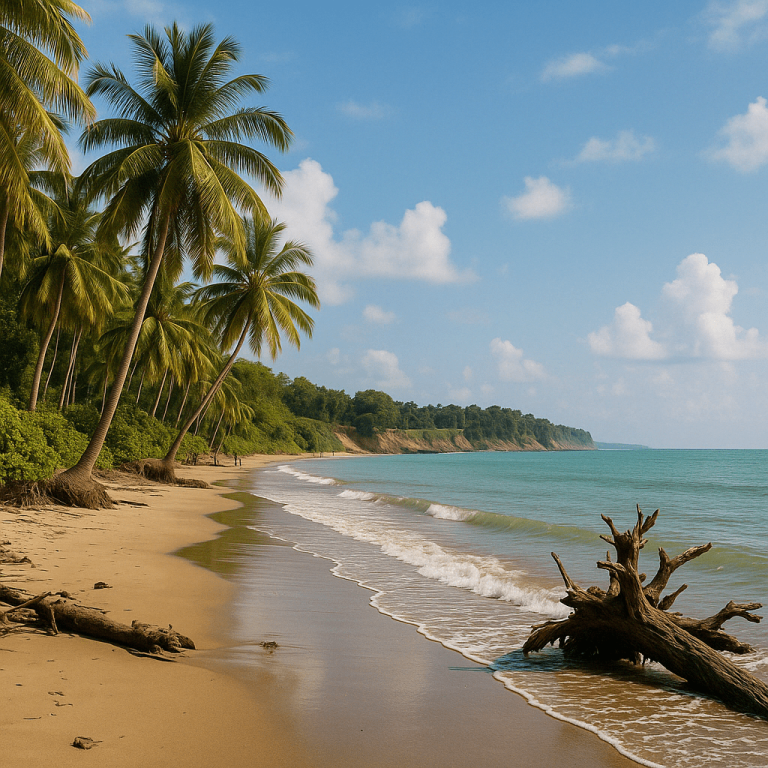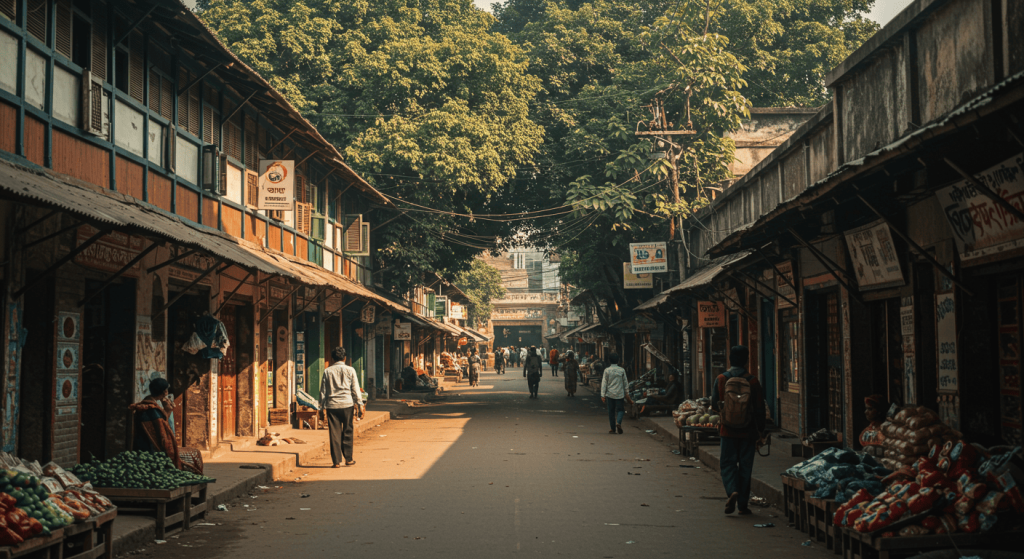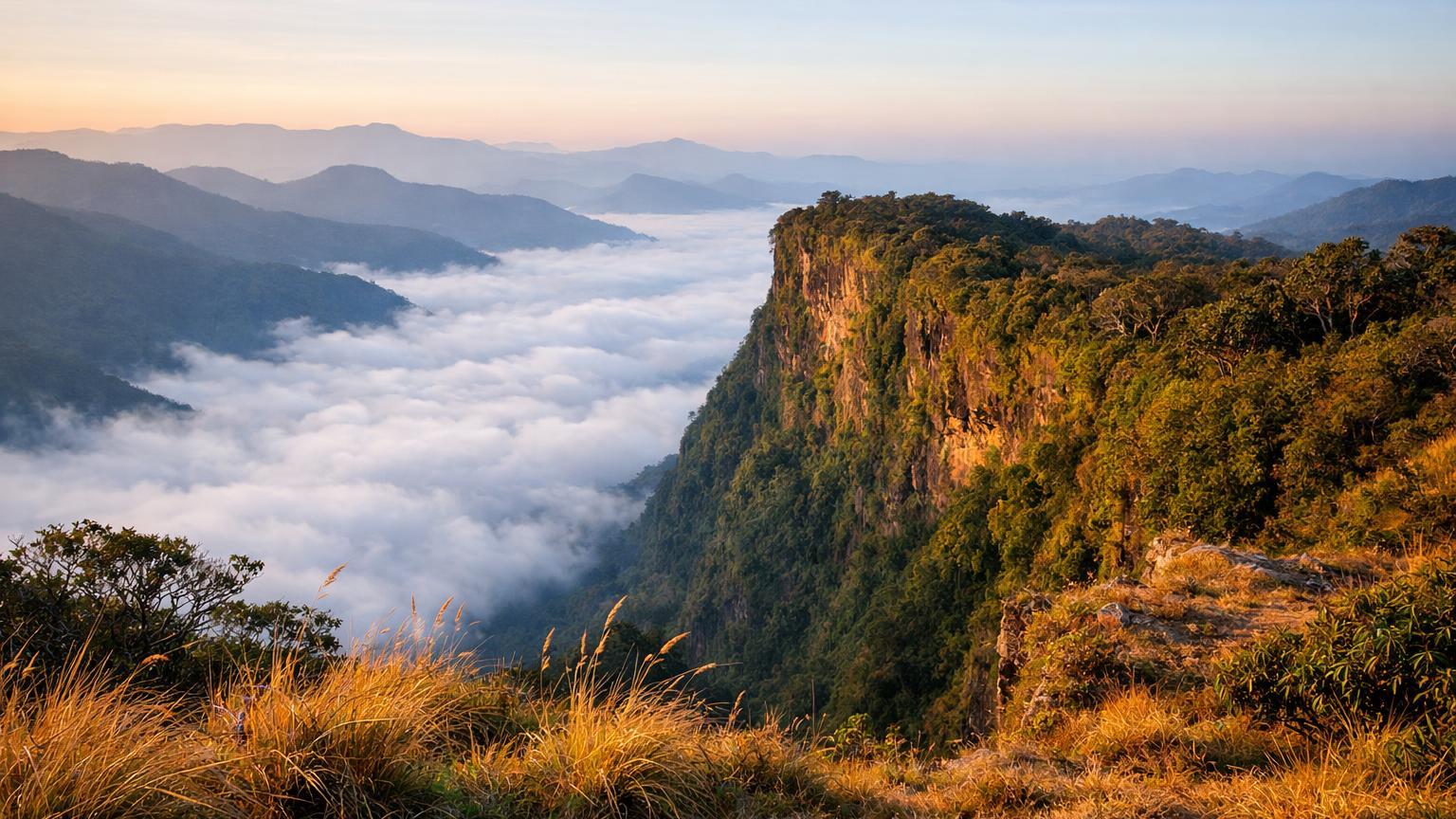
Sri Lanka extreme adventures aren’t just hype. They’re the sort of stories you’ll retell with a grin and a tiny shiver months later. This guide rounds up eight high-adrenaline experiences across the island, with practical details that make planning easy. You’ll plunge rivers, ride wind and waves, skim valleys on a wire, creep to a cliff’s edge, rattle down a notorious mountain road, and even dive a legendary wartime wreck. We’ve checked seasons, safety notes, and ballpark costs as of 2026 so surprises are the fun kind. Pack nerve, curiosity, and shoes that won’t slip when your legs do.
1. Roar down the Kelani
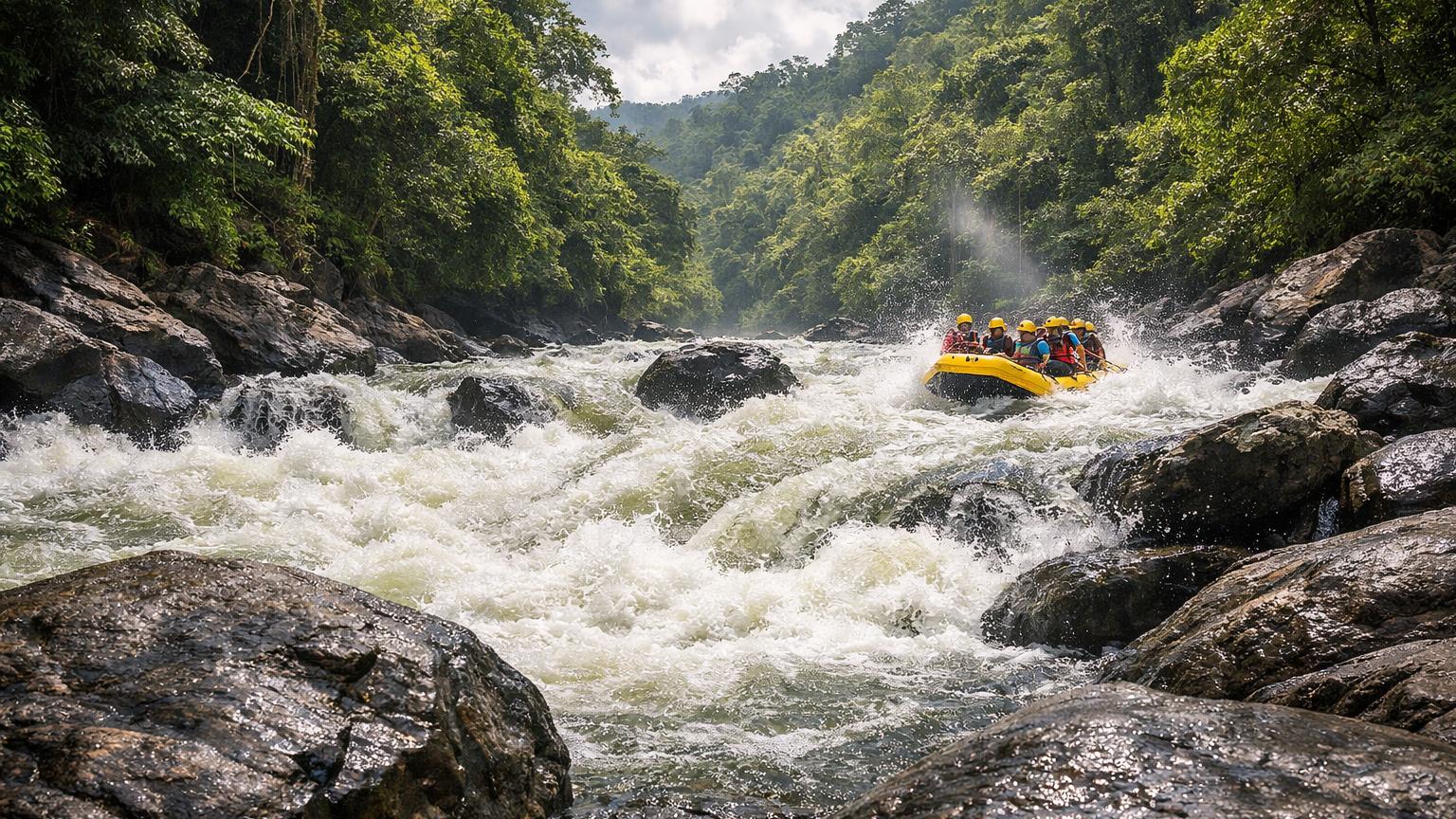
An hour and a half from Colombo, rainforest closes around the Kelani and the water gathers its punch. The standard run in Kitulgala is fast, splashy and friendly to first‑timers, with Grade 3 rapids under certified guides and safety gear provided[1]. On most days you’ll thread a sequence of drops and wave trains that wake up your reflexes without demanding river-God status; the classic route covers five major and four minor rapids before a lazy drift to shore[2]. It’s wet, noisy and extremely good at deleting jet lag.
Practical beats bravado here. Operators brief you on paddling, swim positions and what to do if you pop out, and most set a lower age limit of about 10 years for rafting boats[1]. If you want more than a single run, bundle rafting with canyoning and lunch—your arms will thank your legs for sharing the work later[1].
Good to know: Getting there: 2.5–3.5 hours by car from Colombo, or ask your hotel to arrange a transfer. Best time: Year‑round; river levels bounce with rain. Cost: around LKR 6,500 or US$25 for a basic run as of 2026, with multi‑activity day packs priced higher[1]. Insider tip: Ask for the lead guide’s line through the final rapid—following their paddle makes the best photo sequence[2].
2. Slide, splash, rappel: Kitulgala’s canyon day
When the river feels too… horizontal, step into Katarang Oya. It’s a clear tributary near Kitulgala where a guide leads you down smooth chutes, into jade rock pools and over easy jumps—a forgiving gateway to canyoning with the rainforest for company[3]. You’ll scramble, slide and whoop, discovering that gravity plus wet granite is the island’s most underrated waterpark.
Ready to turn the dial? Swap slides for ropes and descend beside Sandun Ella’s spray. Commercial teams rig dual belays and helmets, then ease you down the waterfall for the kind of focus that makes time stretch (and your whoop echo)[1]. Beginners can stick to the canyon and cheer from the pool; the climby types can meet the water halfway and rappel through it.
Good to know: Getting there: 15–20 minutes from Kitulgala town; operators include transfers. Best time: Dry mornings after rain—ask your guide. Cost: canyoning from around LKR 8,000 per person; waterfall abseiling at Kitulgala and nearby falls typically from about LKR 8,000 as of 2026[4][1]. Insider tip: Wear lightweight socks in your shoes—less grit, more grip[3].
3. Ella’s flying line
Ella looks gentle until you’re clipped into a trolley. Then you hear the whirr, the valley opens and you’re a hawk: the twin‑cable Flying Ravana stretches over half a kilometer from Mini Adam’s Peak, topping out near 80 km/h as tea rows shrink below[5]. It’s ERCA‑certified, with harness checks, a clear pre‑ride briefing and transport back up from the landing[5].
Plan it like a pro. The site runs daily 9:00 a.m. to 5:30 p.m. with last entry at 4:30 p.m.; there’s a short lunch pause, and operations pause for heavy rain or storms[5]. Weight and height limits apply, and kids from six can ride tandem‑style with staff direction. It’s quick, joyous and the best argument for zips before breakfast.
Good to know: Getting there: 10 minutes from central Ella by tuk‑tuk. Best time: Clear mid‑mornings for long views. Cost: around LKR 9,900 per foreign adult for a single ride as of 2026; bundles add activities like the free‑fall jump[6]. Insider tip: Wear snug layers—baggy fabric flaps loudly at 80 km/h[5].
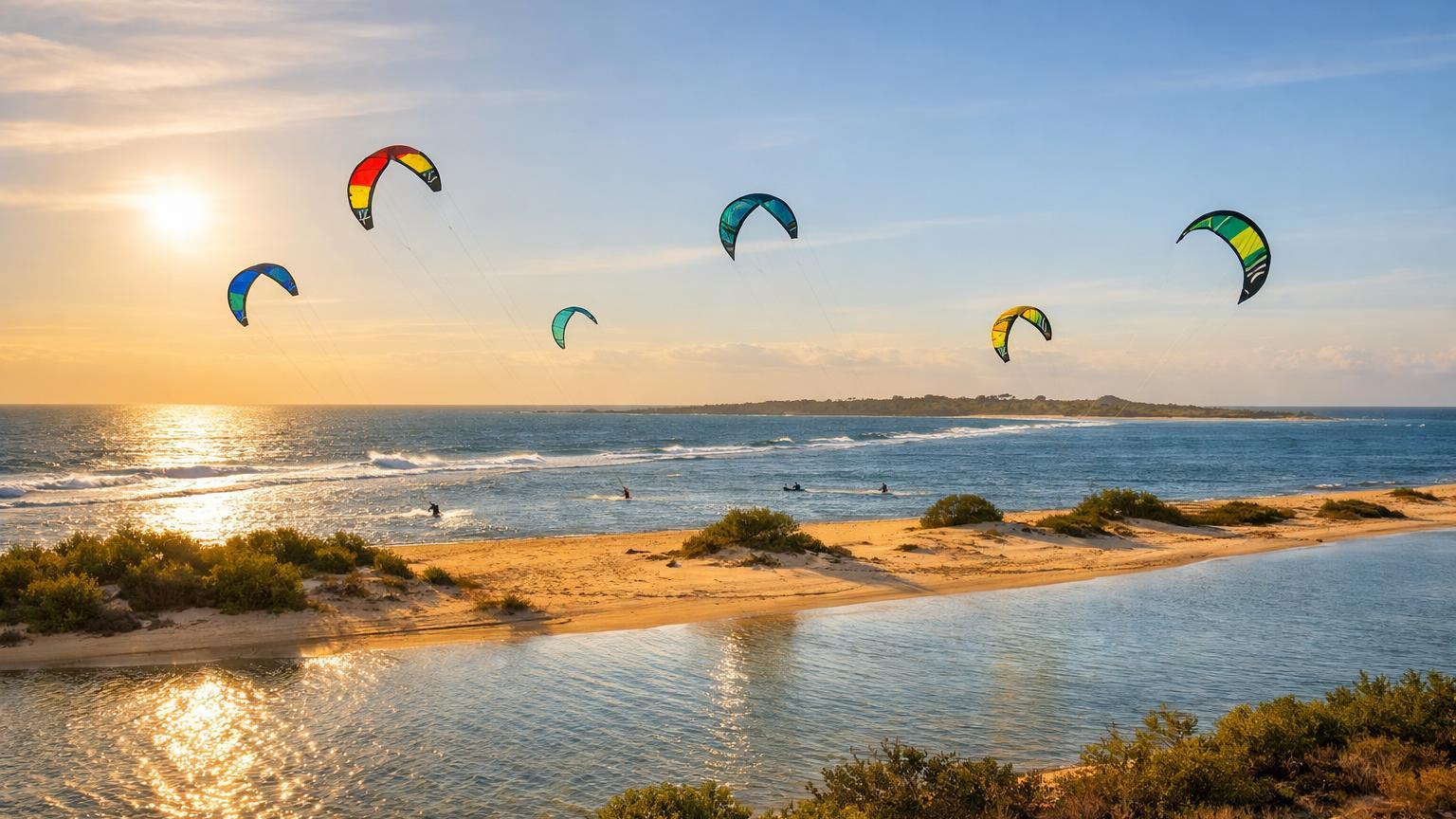
4. Harness the monsoon: ride Kalpitiya’s wind
On the island’s northwest, a necklace of sandbars and lagoons creates a training ground for kiteboarders. The wind engine runs in two seasons: a powerful southwest flow May to October, and a lighter northeast trade December to February, with June–August and mid‑winter the punchiest windows[7][8]. Warm, shallow water keeps falls friendly.
Schools dot Dutch Bay, Kappalady and satellite flats; most include radios, rescue boats and IKO‑certified coaches, so you can progress without hauling a calculator of wind angles in your head. Expect solid 20–25‑knot days in peak summer and plan boat shuttles to the smoothest sandbanks when the main lagoon feels gusty[8]. It’s one of South Asia’s most reliable wind playgrounds for confident intermediates and patient beginners alike.
Good to know: Getting there: About 3.5–4 hours by road from Colombo. Best time: May–Oct for strong SW wind; Dec–Feb for gentler NE sessions[7]. Cost: private lessons from about €60 per hour with gear as of 2026; multi‑hour packs discount that[9]. Insider tip: For buttery water in summer, ask about Kappalady or boat‑access sandbars instead of the town lagoon[8].
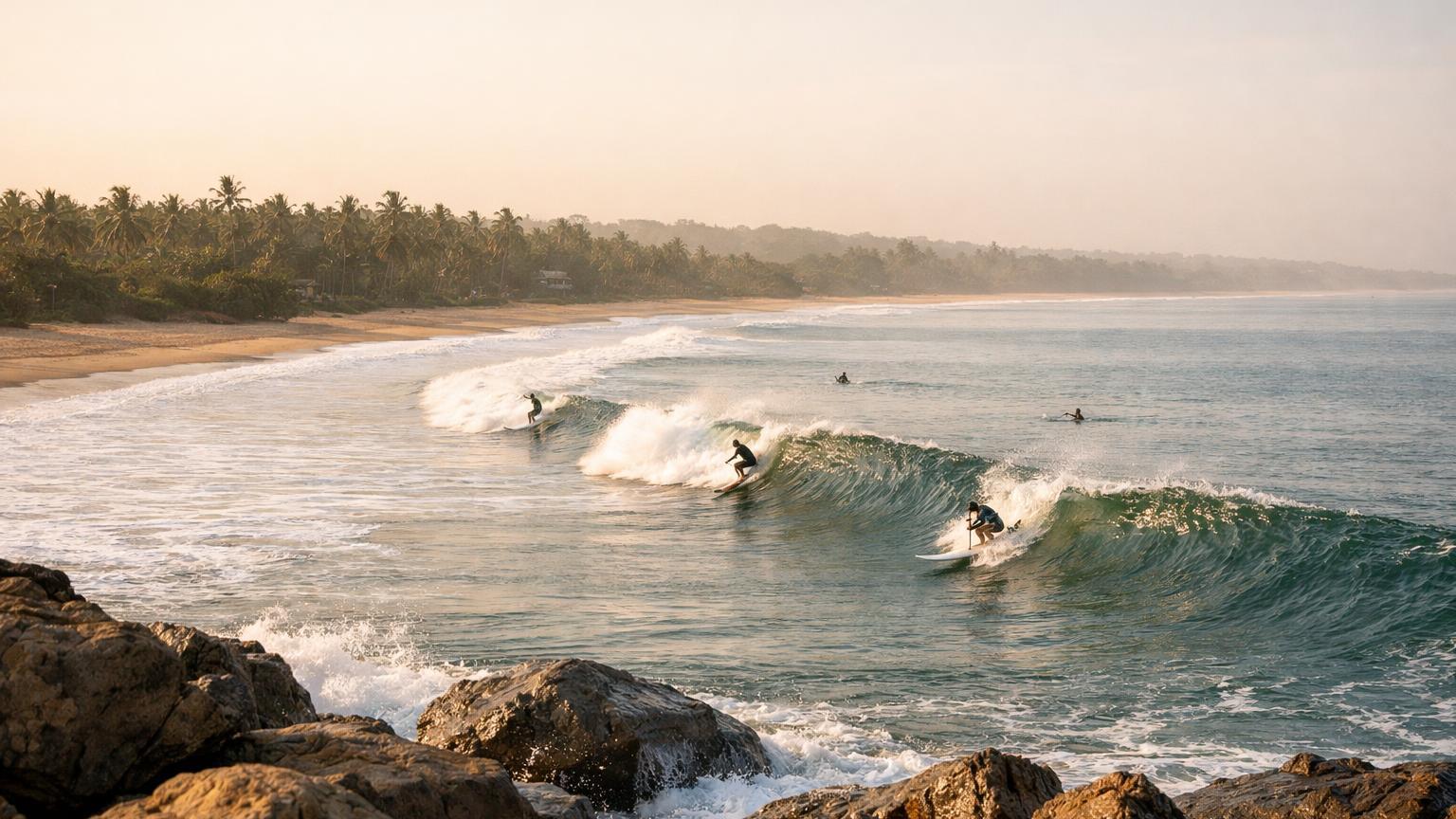
5. Chase the right‑handers on the east coast
Sri Lanka’s most talked‑about waves line up on the east coast. Arugam Bay’s Main Point is a long, right‑hand point break with its best, clearest window May to October, often peaking July–September[10]. The point can serve clean 3–6‑foot days to confident surfers while nearby breaks like Baby Point or Whiskey Point give learners a kinder canvas.
Town revolves around tides. Board‑at‑dawn is normal; breakfast comes with wax crumbs. If you’re new to surfing, schools post lesson boards on tuk‑tuks and lead small groups straight to a forgiving sand‑bottom wave. Prices vary with season and polish, but the bay remains one of Asia’s value classrooms for riding your first unbroken wave.
Good to know: Getting there: 6–7 hours by road from Colombo, or fly to Batticaloa and continue by car. Best time: May–Oct, with the biggest odds mid‑season[10]. Cost: lessons typically around LKR 5,000–9,000 for 1.5–2.5 hours including board as of 2026[11][12]. Insider tip: Ask your coach to start you slightly down the point—less paddle traffic, more actual riding[11].
6. The mountain road that laughs at guardrails
A ragged estate track zigzags from misty Ohiya to warm Kalupahana, dropping past tea, gullies and the headwaters above Sri Lanka’s tallest waterfall. Hikers call it the Devil’s Staircase; maps show roughly 14–16 km of hairpins and ridge cuts linking the plateau to the lowlands and finishing near Bambarakanda Falls[13][14]. You can hoof it downhill in four to six hours, detouring to feel the spray, or take the wilder option in a local 4x4 with a driver who knows every switchback by heart.
It’s not a technical hike, but the descent is long, sun can bite, and rain turns clay to soap. The payoff is a rolling slideshow of the high country slipping away under your feet—plus a cold drink by the falls if you time it right.
Good to know: Getting there: Start at Ohiya Station (train‑friendly) or at Bambarakanda trailhead off the A4 at Kalupahana[14]. Best time: December–April for drier footing; mornings are clearer. Cost: guided 4x4 trips from around LKR 30,000 per jeep as of 2026, seating six to eight[15]. Insider tip: If hiking, arrange a pickup at the far end—the climb back up is for mountain goats only[13].
7. Peer off the edge of the island
Horton Plains is soft moorland and montane forest until, quite suddenly, it isn’t. The trail tips to World’s End, a cliff where the land simply stops and the view tumbles nearly a vertical kilometer into the lowlands. The national park is open to day visitors from 6:00 a.m. to 6:00 p.m.; go early for blue‑sky chances and quieter paths[16]. The full loop is a half‑day walk that also visits Baker’s Falls before circling back through grassland and cloud forest.
Tickets use a tiered fee: foreign adult entry is around 25 US dollars as a base, calculated with taxes and small extras on top; a per‑vehicle charge also applies at the gate as of 2026[17][18]. It’s a thrill you don’t need a rope for—just sensible shoes and a respect for edges when mist slides in.
Good to know: Getting there: Drive to the park gate via Ohiya or Nuwara Eliya; parking is inside the reserve. Best time: Arrive for the 6:00 a.m. gate to beat clouds at World’s End[16]. Cost: around US$25 per foreign adult plus vehicle and taxes as of 2026[17][18]. Insider tip: Walk the loop clockwise so you reach World’s End before Baker’s Falls—views fade fastest[18].
8. Drop to a legend: the Hermes deep wreck
For divers with the right training, this is Sri Lanka’s most storied descent. The HMS Hermes, the world’s first purpose‑built aircraft carrier, lies off Batticaloa at roughly 42–53 m and is treated as a solemn war grave draped in soft corals and schooling fish[19][20]. Expeditions run in the east‑coast dry season, typically April through September, and operators specify at least Tec 45 (or equivalent) for certification, with trimix recommended[19][20].
Conditions and protocols matter. Trips are led by technical teams, and photography is limited to respectful exterior passes. It’s a dive you feel in your legs and your lungs long after surfacing—and one where conservative plans are part of the story you’ll tell later.
Good to know: Getting there: Base yourself in Batticaloa or Passikudah; boats run 30–45 minutes to the site. Best time: April–September with calmer seas in the east[19]. Cost: operators price Hermes expeditions on request; as a benchmark, standard wreck dives in Sri Lanka run about US$39–100 per dive as of late 2026, with tec gases extra[21]. Insider tip: Bring a reel and solid lights, and confirm recompression support and evacuation plans before you book[19].
Final thoughts
Sri Lanka extreme adventures come in flavors of water, wind, wire and rock. Pick one or stack a few: the island rewards nerve with scenery and smiles. Book early in peak months, treat guides and rules as your safety net, and you’ll be laughing at your fear over a very well‑earned rice and curry.
Sources
- Outdoor Adventure Center Kitulgala | White Water Rafting Sri Lanka ↩
- Kitulgala Adventures – White Water Rafting product page ↩
- Katarang Oya – Canyoning, Ceylon Extreme Adventures ↩
- The Marvel Adventures – Daily Activities and Rates (Kitulgala) ↩
- Flying Ravana Mega Zipline – Activities and Information ↩
- Flying Ravana – Rates and Packages (2026) ↩
- Kitesurfing Lanka – Kalpitiya seasons and school (PDF) ↩
- Kitesurfing Kalpitiya FAQs – seasons and wind strength ↩
- Setha Wadi Kite, Kalpitiya – Lesson pricing (2026) ↩
- Sri Lanka Tourism Development Authority – Arugam Bay study (season) ↩
- Dylan’s Surf Company – Arugam Bay surf school lesson prices ↩
- Arugam Bay 2026 Guide – season and typical lesson costs ↩
- The Sunday Times (Sri Lanka): Hiking the Devil’s Staircase to heaven ↩
- Horton Plains–Kalupahana Trail note (includes Devil’s Staircase), NuwaraEliya.com ↩
- Haputale Skyline Tours – Devil’s Staircase 4×4 tour price (2026) ↩
- Gazette Extraordinary No. 2292/11 (Aug 8, 2022): National Reserve visiting hours and rules ↩
- National Climate Finance Strategy of Sri Lanka 2025–2030 – indicative site fees ↩
- Fernweh Guide – Horton Plains tickets and loop facts (2026) ↩
- Sri Lanka Diving Tours – HMS Hermes Wreck Tour 2026 ↩
- Sri Lanka Diving Tours – HMS Hermes Rediscovery and Tec 45 requirement ↩
- Scuba diving in Sri Lanka – typical 2026 dive prices (Sri Lanka Journeys) ↩