Chinese alpine villages reward early risers: mist lifts, yaks ring their bells, and timber roofs glow in first light. Our pick of Chinese alpine villages is spread across Sichuan, Yunnan and Xinjiang, where stone towers and wooden farmsteads still anchor daily life. This is a practical guide for curious travelers who like small roads and big skies. Expect short hikes, homestay roofs turned viewing decks, and noodles by wood‑smoke. Spring blossoms and autumn color are peak season, but winter skies can be crystalline. Read on for seven quiet places that feel a world away, plus how to reach them without turning the map upside down.
1. Pear-blossom roofs above the Dadu
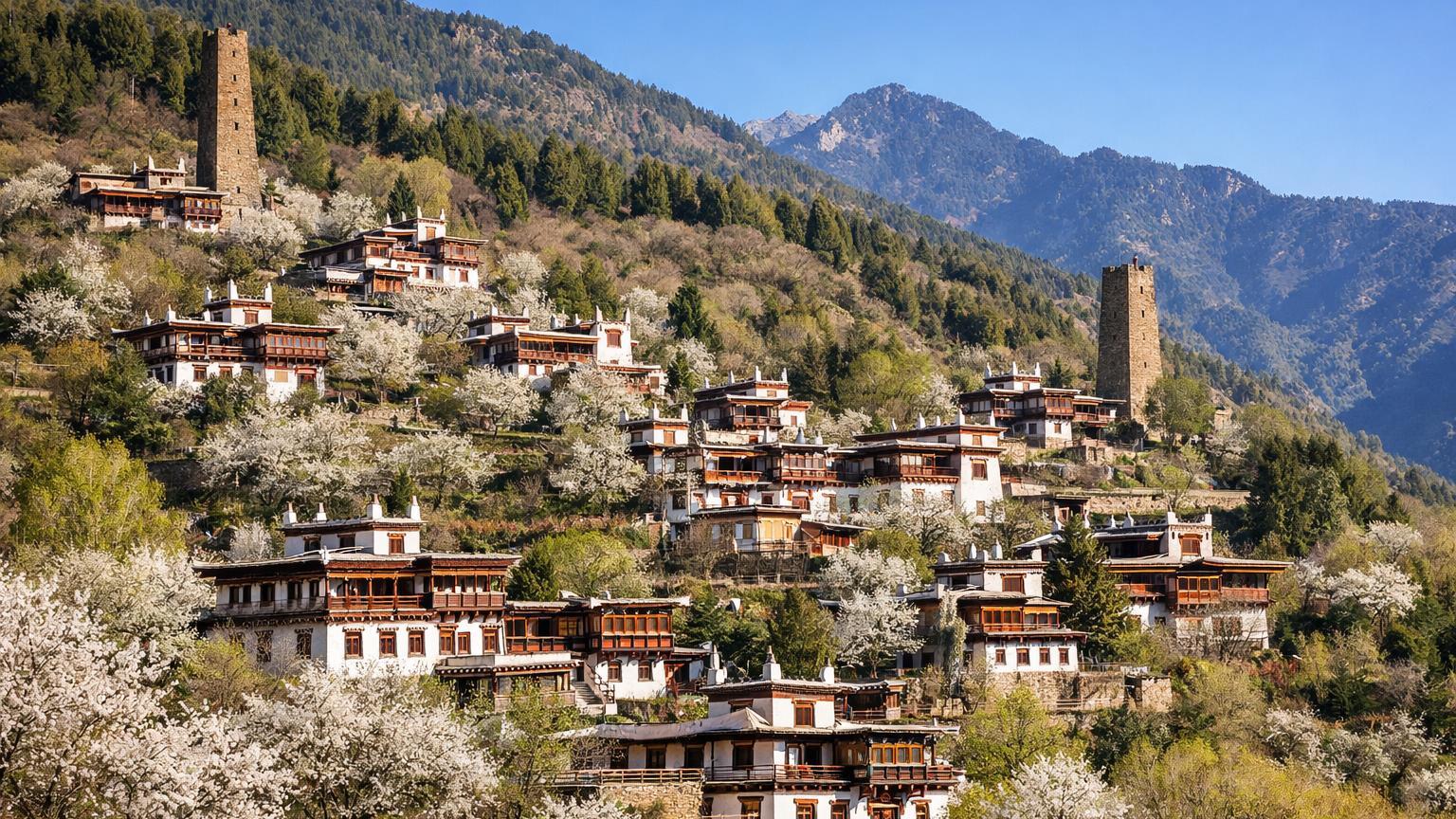
On a sunny morning in Jiaju, white‑walled Tibetan houses step up a steep hillside like chess pieces left mid‑game. Watchtowers punctuate the skyline and pear trees lace the lanes; in spring and again in russet autumn, the whole valley turns painterly. Stay in a family guesthouse, sip butter tea, and walk out to the viewing decks as the first light hits the watchtower ridge. The valley sits at moderate altitude, so you get big‑mountain views without a lung‑busting climb.
Culture runs quiet but deep here: granaries stacked with barley, rooftop flags snapping in the breeze, and wood‑built kitchens perfumed with juniper smoke. It’s popular with photographers, yet wander a little off the main platform and it’s just you, the breeze, and a rooster intent on public speaking. Bring layers; mornings start crisp even on fine days. If you time it for blossom season, book early and plan a slow day or two.
Good to know: Getting there: From Danba town, a simple county bus runs to Jiaju for about CNY 5, or hire a car locally[1]. Admission: around CNY 50 as of 2026; a village shuttle bus is listed at about CNY 25[3]. Best time: spring pear blossom and October–November color are the sweet spots[2]. Insider tip: Skip midday glare; go at sunrise or late afternoon for a watchtower skyline that photographs itself[2].
2. Stone lanes and sky‑spearing towers
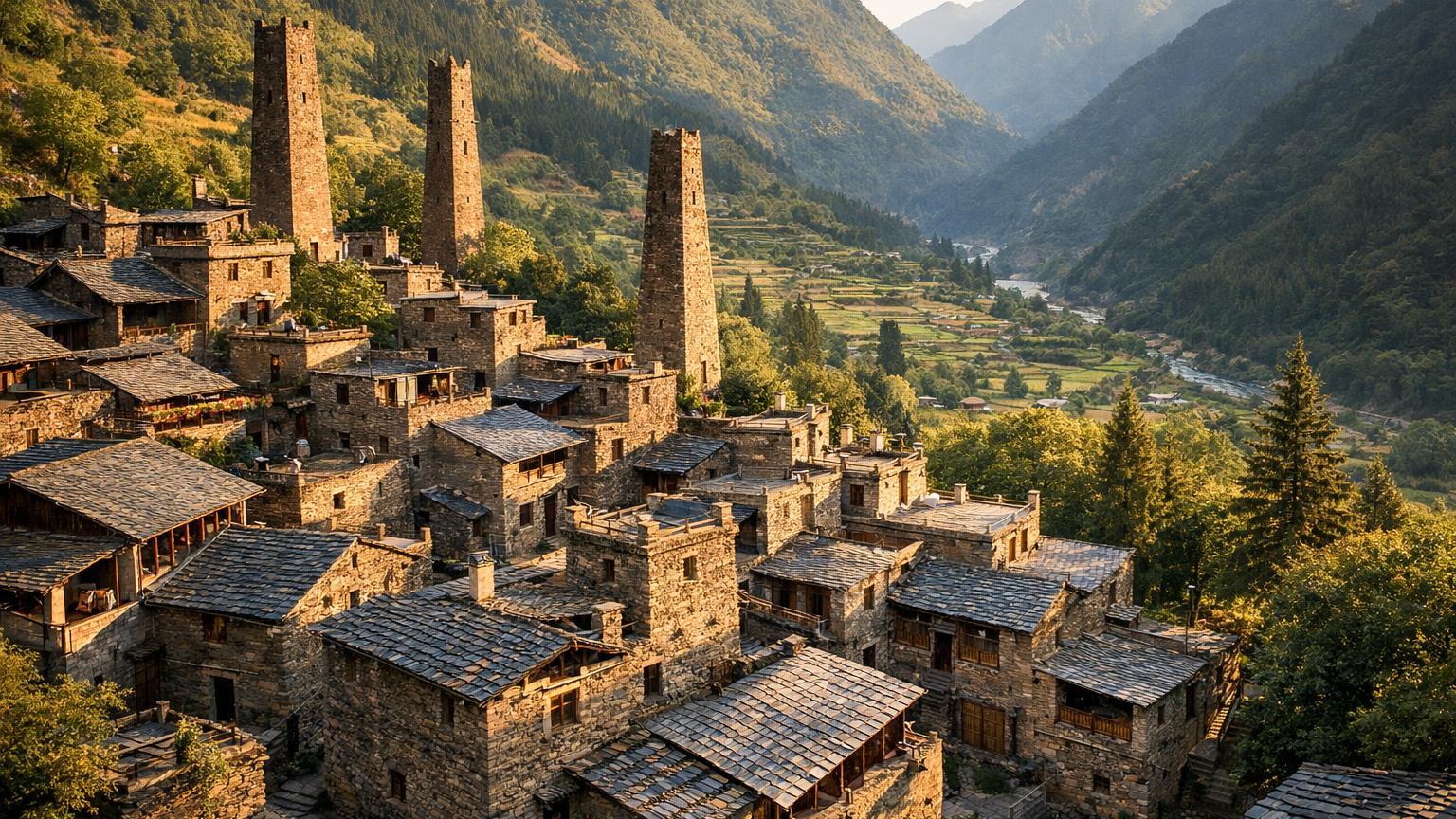
Taoping’s ancient Qiang watchtowers look like arrows frozen in flight. Between them, a maze of slate‑paved alleys threads past stone houses and tiny courtyards, where peppers dry red against grey walls. The layout is defensive and ingenious, with hidden passages and water channels once designed to keep villagers safe. Today it’s a quiet place to wander, trace the grain in timber lintels, and climb a tower for a valley‑wide panorama.
Afternoons are golden. Sun warms the stone, swallows loop over the rooftops, and the surrounding ridgelines layer into blue. It’s a small circuit, so take your time: pause for buckwheat noodles, peek into a courtyard museum, then circle back as shadows lengthen. Photographers will love the high contrast between dark towers and bright sky; pack a polarizer if you have one.
Good to know: Hours and fees: The site typically opens 8:30–18:00; expect tickets around the CNY 60 mark as of 2026, sold on‑site[4]. Getting there: Taoping sits on the G317 west of Chengdu; most visitors come by self‑drive or hired car from Li County. Best time: Clear‑sky days after rain deliver sharp views of towers against the mountains. Insider tip: Climb a tower near sunset for long shadows that carve the alleys into relief[4].
3. Walk‑in village beneath a sacred peak
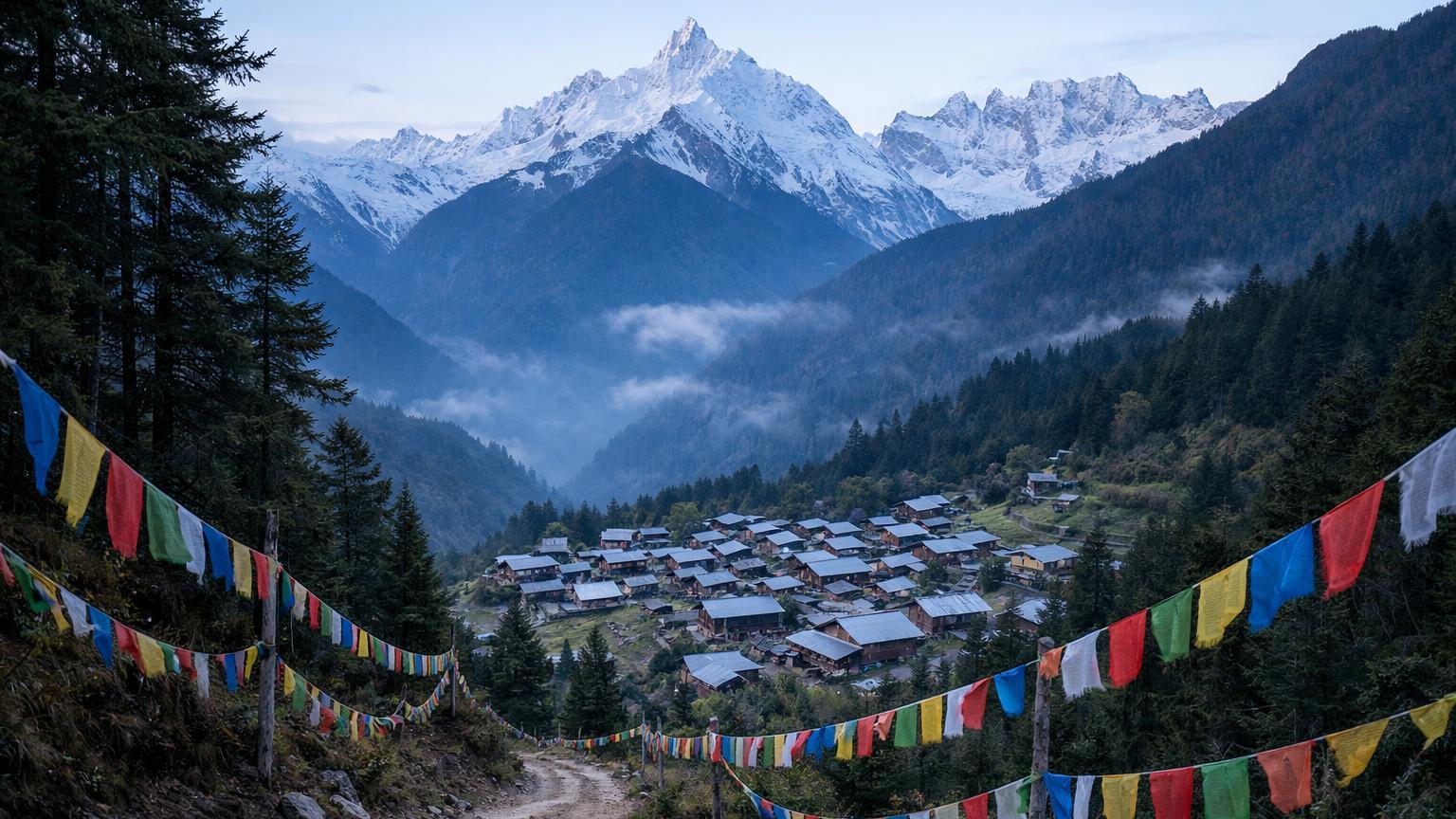
Yubeng sits in a forested cirque below Meili Snow Mountain, reached on foot along old caravan trails. The approach is part of the charm: pines, prayer flags, and switchbacks that open to sudden views. Once in Upper or Lower Yubeng, days fill easily with valley walks, bowls of hand‑pulled noodles, and slow evenings watching alpenglow pick out the skyline. It feels remote without being austere, and the night sky on a clear evening can stop conversation mid‑sentence.
Hiking here is straightforward for steady walkers, with optional horse rides offered on steeper sections. Pack for changeable weather and chilly nights. Guesthouses are simple but friendly; many have electric blankets and a kettle posted like a promise. Take cash for small purchases and keep your passport handy; rural inns may still register guests the old‑fashioned way.
Good to know: Access: Public transport from Shangri‑La to Feilaisi is about 3.5 hours, then onward to the trailhead; many hikers enter via Xidang or Ninong depending on current trail status[5]. Trail: The classic Xidang approach to Upper Yubeng is roughly 12 km and commonly takes 5–7 hours on foot; Ninong is a longer alternative[6]. Budget: Simple rooms in Yubeng often start around CNY 120 per night as of 2026; local guides are commonly hired for about CNY 300 per day[7]. Insider tip: Start pre‑dawn for sunrise on the ridge and quieter trails[5].
4. A cliff‑top fortress above the Jinsha
Perched on a giant boulder in a bend of the upper Yangtze, Baoshan Stone City looks purpose‑built for legends. Naxi families have shaped stone lanes and homes to the rock for centuries, and from the rim path you look straight down to bright fields stitched along the river. Mornings bring river mist and rooster calls; evenings bring a sky of cold stars and the faint hush of the canyon below.
There’s not much to “do,” which is the best part. Walk the wall‑like lanes, greet farmers returning with herbs, and watch swallows skim the terraces. If your legs are fresh, follow a local guide on the Taizi Pass trail to Yuan‑era cliff carvings and big‑angle views. The last stretch of road in is narrow and cliffside, so a clear‑day arrival is kinder on nerves and photos alike.
Good to know: Access and costs: Admission is currently free; it’s about 130 km from Lijiang, a 3.5–4 hour mountain drive. Typical round‑trip car charters run around CNY 600–800 per vehicle, with the final 30 km a slow cliffside road[8]. Best time: March–May and September–November bring mild air and frequent cloud seas over the Jinsha[8]. Insider tip: Stay the night for dark skies and river‑bend dawn light from the village rim[8].
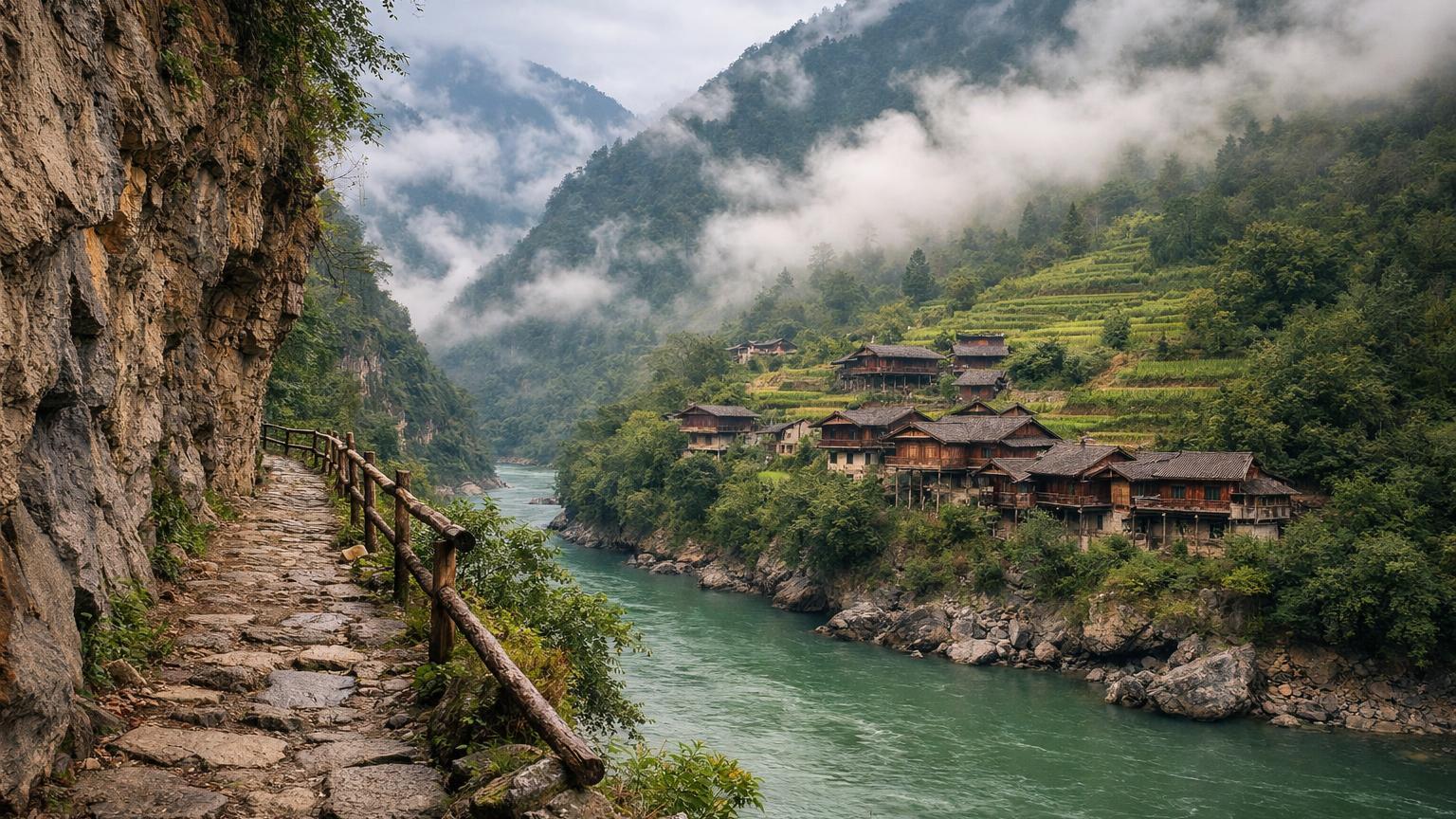
5. Tea‑Horse Road ledges into a misty Nu valley
North of Bingzhongluo, the Nu River slices a deep canyon where Wuli clings to terraces above green water. Getting there is memorable: you walk the old Tea‑Horse Road cut straight into the cliff, a narrow ledge with stone retaining walls and constant river views. The village itself is a small tumble of timber houses and vegetable plots, with corn racks and wood smoke speaking louder than souvenirs.
Spend a slow day. Trace the cliff path, sit by the river at Chaohong Bridge, then continue on the caravan trail toward Qiunatong for a bigger walk. Mornings often hang with cloud that the sun gradually burns off, and evenings are lantern‑soft. This is one of those small places where the way in is half the story and the way out is the other half.
Good to know: Access and costs: The wider Bingzhongluo scenic area is open year‑round and free to enter; some view platforms charge small parking fees[9]. Route: The cliff‑cut ledge is the only land access to Wuli; take care in wet weather. The Wuli–Qiunatong stretch is about 8 km and typically 2–3 hours on foot[10][9]. Insider tip: Start early for morning mist and a quieter ledge; carry water and snacks as there are few stalls en route[9].
6. Salt wells, ham, and stair‑stepped lanes
Nuodeng hides in the folds of Yunnan’s Cangshan foothills, a Bai village known for brine‑fed salt wells and air‑cured ham. Stone steps climb past timber courtyards where hams hang from beams and copper basins catch morning light. Wander slowly to the temple ridge for a valley panorama, then drop into alleys where water channels gurgle beside earthen walls. It’s living heritage without the turnstiles.
Evenings are quiet, and winter brings the village’s culinary rhythm into focus as hams cure in the cold, dry air. Plan for steep steps and luggage you can carry. Most inns are family‑run and happy to share the stories behind their door gods and salt jars. Bring small notes for snacks and salt buys; mobile signal can fade between staircases.
Good to know: Access and costs: Entry to the village is free; a small joint ticket for Yuhuang Pavilion and related sights is around CNY 30 as of 2026, sold on‑site[12][13]. From Dali’s express bus station, minibuses to Yunlong are listed at about CNY 60 per person; arrange a short transfer up to the village with your guesthouse[11]. Best time: November–March is ideal for clear air and the ham‑curing season[4]. Insider tip: Ask your host to arrange a quick stop at the Taiji Water‑Locking viewpoint en route for a valley‑scale photo[11].
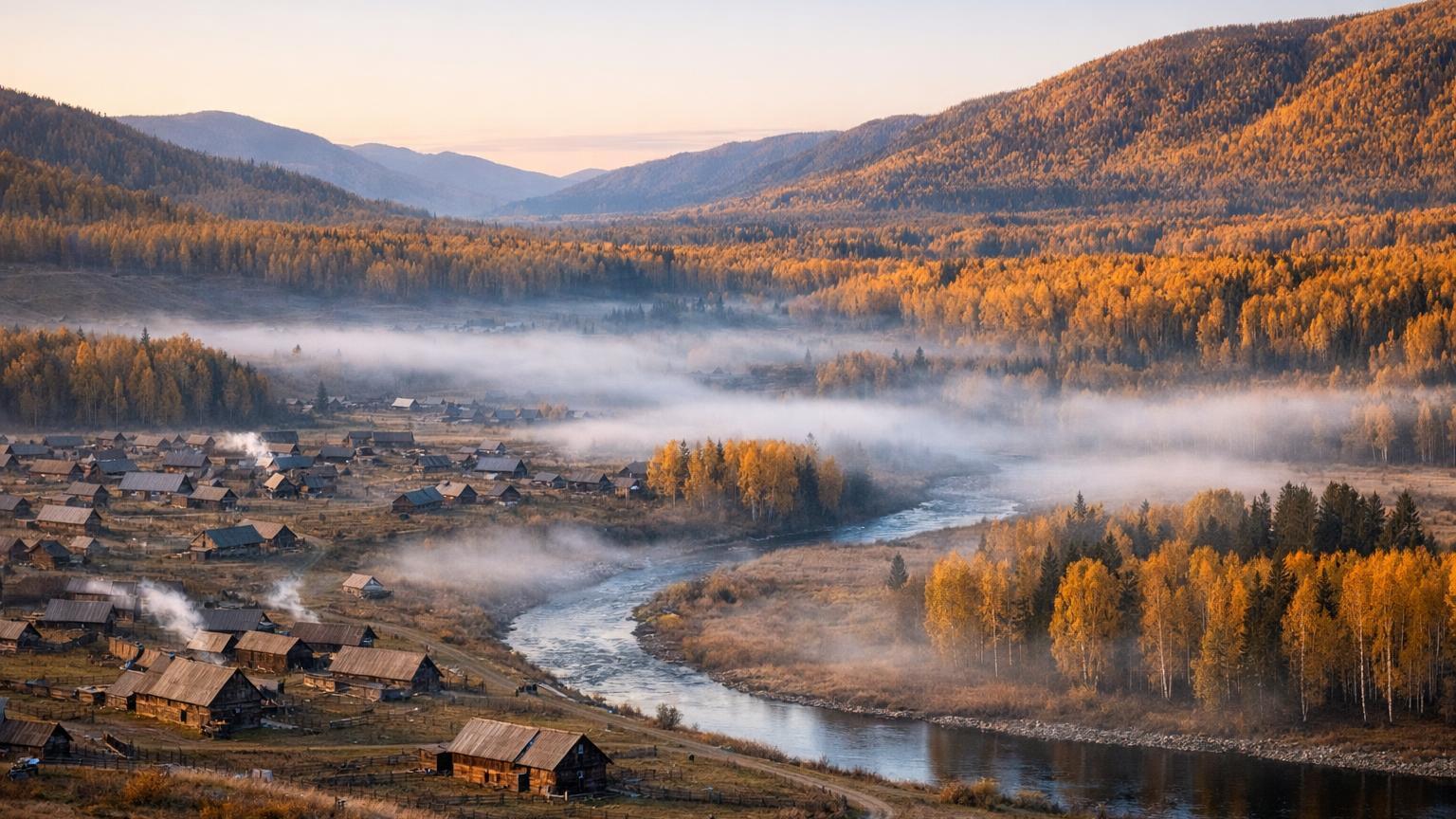
7. Birch‑gold mornings in Tuva country
Hemu is a scatter of log cabins in a high, cold valley framed by birch forest and rounded hills. At sunrise, white mist sits low over the Hemu River while cabins catch warm light and horses nose through meadow frost. It’s one of the Chinese alpine villages that rewards unhurried mornings: stroll to a ridge for a broad look at the valley, then drop to the river for reflections and wood‑smoke curls.
Life is simple here: wooden footbridges, stove‑warmed rooms, and long twilights in autumn. Photographers set alarms; casual walkers follow boardwalks into the birch. Pack layers even in September. If you’re combining Hemu with Kanas Lake, allow at least two full days so you aren’t racing the shuttles or the light.
Good to know: Tickets and transport: Hemu’s entrance ticket is about CNY 50 in peak months; shuttles are required, with typical round‑trip fees around CNY 50 from Jiadengyu to Hemu Ticket Station plus about CNY 45 onward into the village. Combo passes covering Kanas, Hemu and Baihaba run around CNY 195 in peak season, with off‑season pricing lower[14]. Season: Late September to early October brings peak birch‑gold and frequent morning mist; it’s the most photogenic window[15]. Insider tip: First light on the ridge above the village is the money shot; go early and linger as fog thins[16].
Final thoughts
China’s mountains still shelter quiet corners where lanes are stone and dawn is a show. These seven Chinese alpine villages pair culture with scenery and give you room to breathe. Pack light, start early, and let small roads lead you to big mornings.
Sources
- Danba Tibetan Villages, Sichuan: Jiaju, Suopo, Zhonglu ↩
- Jiaju Tibetan Village, Danba (best seasons and travel) ↩
- Jiaju Tibetan Village Tickets and practicals (2026) | Trip.com ↩
- Taoping Qiang Village: hours and ticket (2026) | Trip.com ↩
- Yubeng Trek logistics (Shangri‑La to Feilaisi) | China Adventure ↩
- Yubeng – Travel guide at Wikivoyage (route and distance) ↩
- Yubeng Village Guide: lodging and local guide costs | GoChinaCompass ↩
- Baoshan Stone City: admission, distance and charter quotes (2026) | Trip.com ↩
- Bingzhongluo scenic area overview (access, free entry, Wuli trail) ↩
- Wuli Village: Tea‑Horse Road cliff path details ↩
- Trips from Dali: Nuodeng bus fare reference | yunnan.guide ↩
- Nuodeng: access and free entry (2026) | Field Guide to China ↩
- Nuodeng Old Village practicals (joint ticket info) | Trip.com Moments ↩
- Kanas & Hemu official-style ticket and shuttle fees (2026) | TravelChinaGuide ↩
- Xinjiang CITS: Kanas–Hemu autumn window and fees (2026) ↩
- Hemu Village access within scenic system | China Discovery ↩