Follow the Oman spice trails and you follow history you can taste. For centuries, Omani sailors ferried saffron, cardamom, dried limes, and frankincense along sea routes that stitched Arabia to India, East Africa, and beyond. This flavors-first guide picks six places where that story still seasons daily life, from market breakfasts to museum strolls. You’ll browse souqs, time a lively livestock market, sip spiced coffee in a mud-brick house, and stand where incense once shipped out to the world. Nothing here is theoretical; it’s all places you can reach, eat, and enjoy—ideally with an empty backpack and a roomy stomach.
1. Perfume, pepper, and the past in Muttrah’s maze
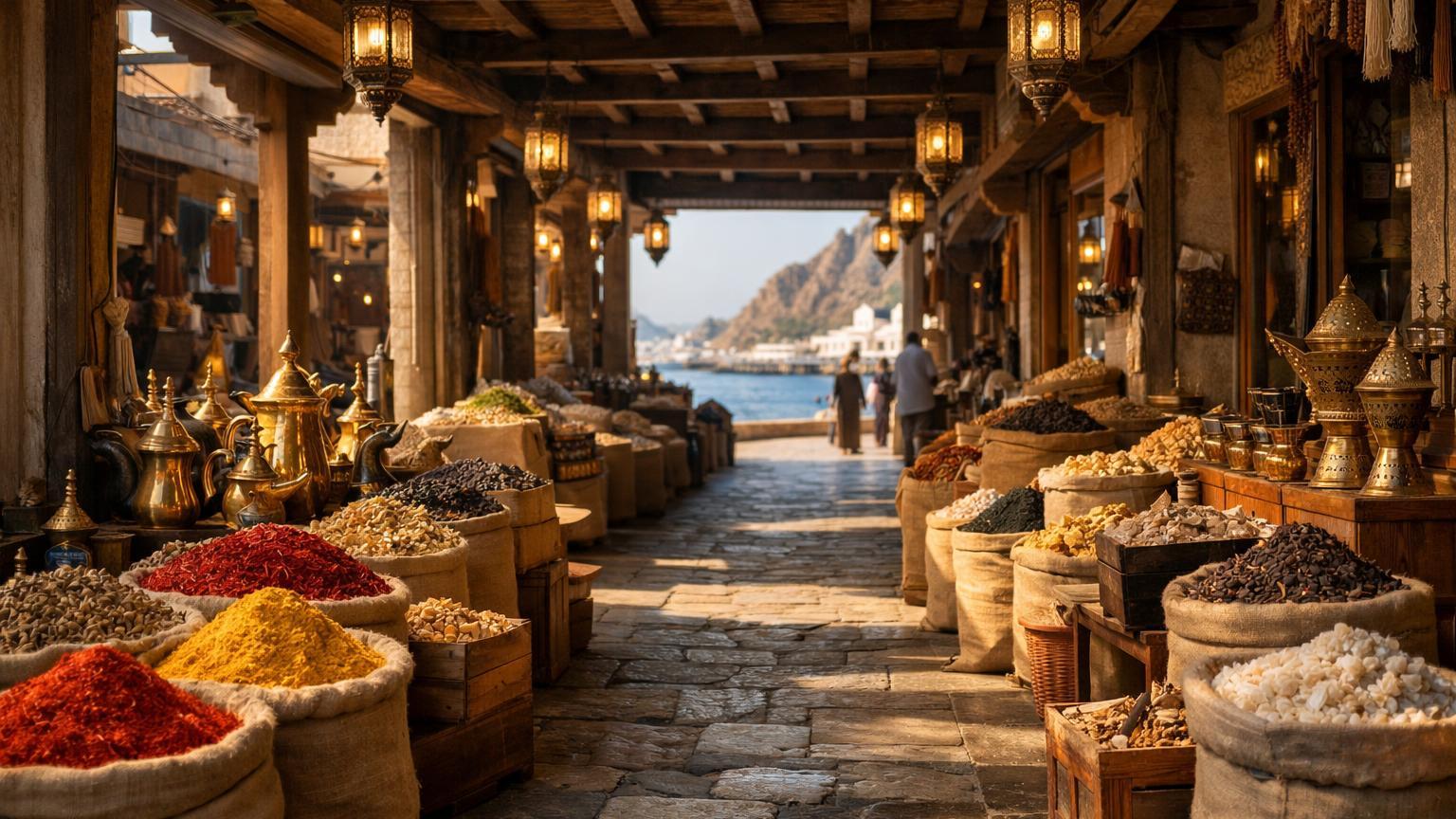
Step off the Corniche into Muttrah’s timber-roofed alleys and you’re on the Oman spice trails in miniature. Frankincense resin glows like amber pebbles, saffron threads whisper from glass jars, and the air carries citrusy wafts of loomi (dried lime). It’s easy to wander for an hour and still feel there’s more cumin to sniff and more rosewater to compare. Plan your browsing around the souq’s split-shift rhythm: mornings roughly 9:00–13:00, then an evening reopening around 16:00–22:00, with slightly shorter Friday hours that still keep the place lively [1]. There’s no gate or turnstile here; entry is free, meaning your only “ticket” is whatever you choose to buy, barter for, or politely decline as you go [2].
Good to know: Getting there: the souq opens directly off the Muttrah Corniche. Best time: evenings feel cooler and busier after the 16:00 reopening [1]. Rough cost: no ticket needed to enter [2]. Insider tip: for cooking at home, ask spice sellers to grind loomi to your preferred coarseness—great for marinades.
2. Dawn at the dhow: Muscat’s sculptural fish market
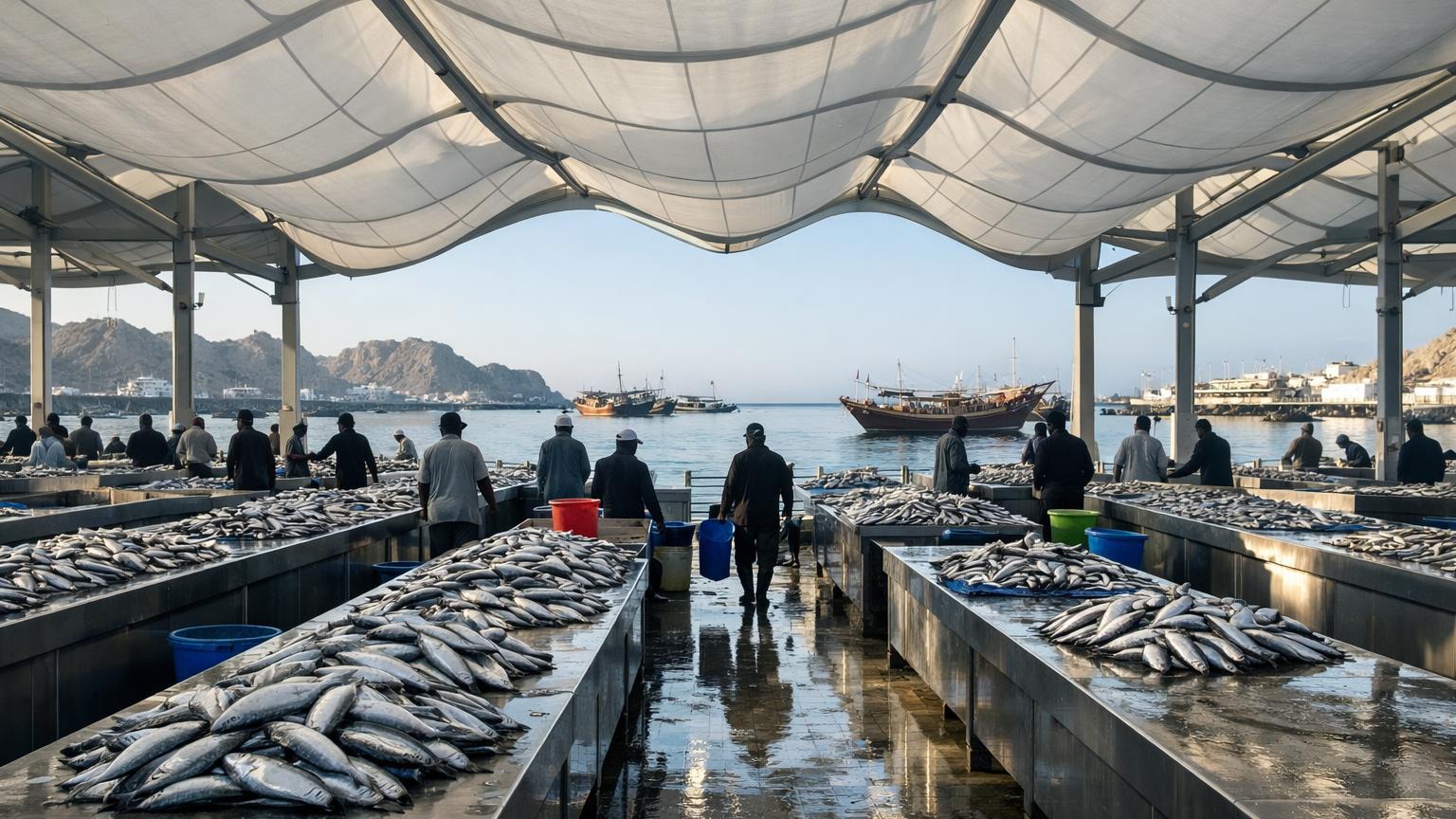
A few minutes’ stroll from the souq, the waterfront’s sweeping white canopy signals Muscat’s most photogenic place to buy breakfast. The Muttrah Fish Market, redesigned by Snøhetta and opened in 2017, rises like calligraphy beside the harbor, a 4,000-square-meter space where cutters, buyers, and curious eaters share the same shade [3]. It is equal parts community kitchen and contemporary landmark. If you like your food stories with facts, look up: that elegant roof shelters a serious operation. The municipality’s fit-out includes dedicated platforms for selling and filleting fish, plus produce and butcher counters that turn dawn’s catch into meals-in-the-making [4]. Arrive early, follow your nose to the tuna and kingfish, then take your haul to a nearby grill for a simple, spice-brushed lunch. Nets, knives, nap time to follow.
Good to know: Getting there: on the Muttrah Corniche, a short walk from the souq. Best time: early morning for the liveliest market scene. Rough cost: market entry is free; you pay vendors directly. Insider tip: ask fish sellers which local herb-and-lime rub pairs best with today’s catch; they’ll point you to the right combo.
3. Dates, halwa, and Friday drama at Nizwa’s souq
Nizwa has traded in dates and spice mixes for centuries, and its souq still hums with that energy. Browse neatly labeled spice jars, sample date syrups, and save room for a spoon of cardamom-and-saffron halwa before you go. On Fridays, the pace quickens around the open ring where livestock circle as bids fly—part marketplace, part living tradition. Time it right. Typical weekday souq hours run roughly 9:00–13:00 and 16:00–21:00, while the Friday goat-and-cattle market peaks from about 7:00 to 10:00 [1]. Arriving on the early side earns you cooler air and a front-row view of the action. Afterwards, the date hall is perfect for comparing varieties, from sticky khalas to sturdy fard—excellent travel snacks, excellent gifts.
Good to know: Getting there: central Nizwa, a short stroll from the fort. Best time: Fridays 7:00–10:00 for the livestock market; late afternoon for spice and dates browsing [1]. Rough cost: browsing is free; bring small notes for tasters. Insider tip: pick up powdered loomi and baharat here to compare blends with your Muscat buys.
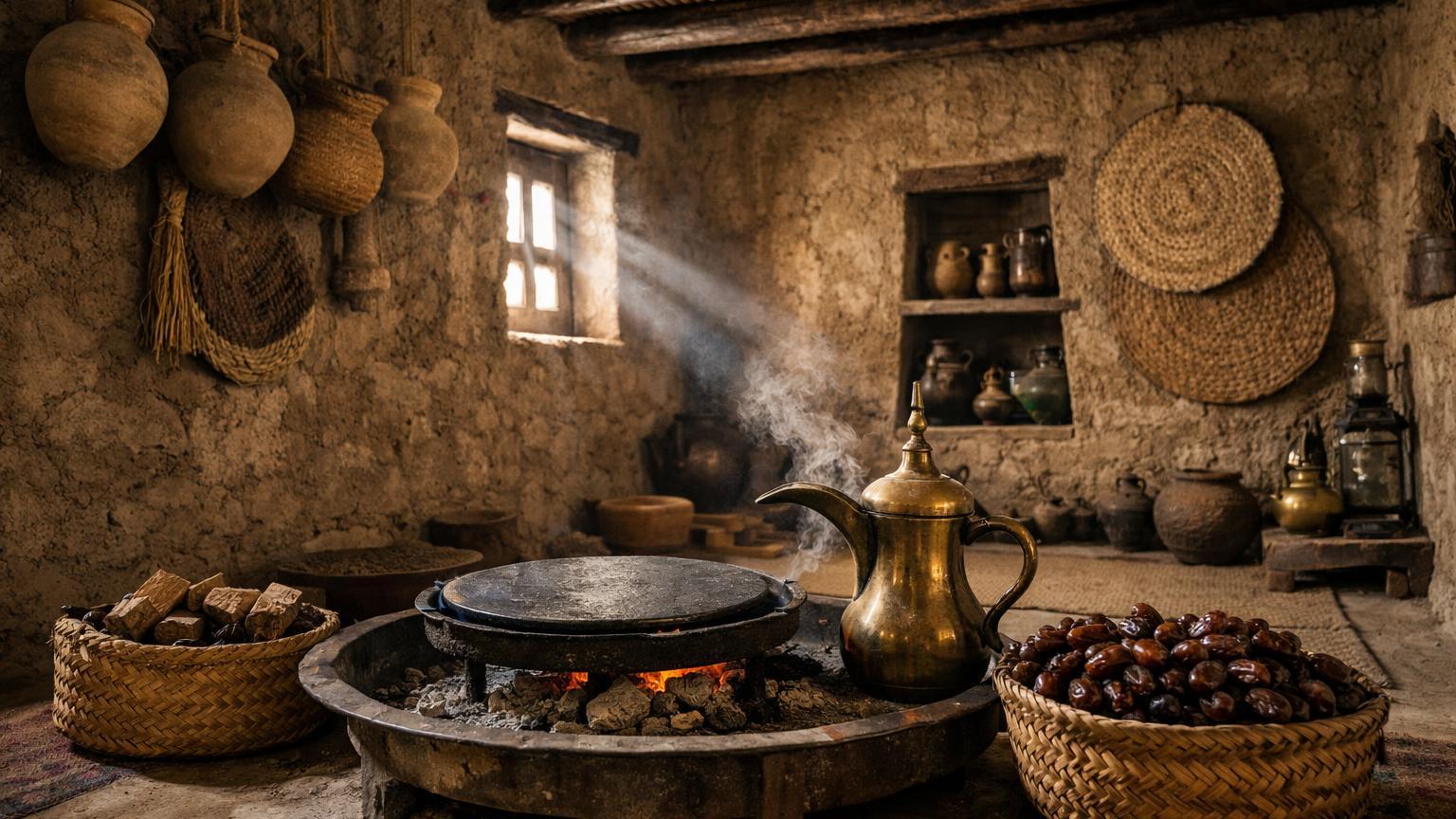
4. Coffee, griddles, and living heritage at a mud-brick house
For hands-on heritage, duck into Bait Al Safah, a restored mud-brick home where hosts grind coffee, bake thin breads on a hotplate, and explain how everyday Omani life once ran on dates, flour, ghee, and spice. It’s a small, story-rich stop that turns pantry staples into culture you can smell and taste. There’s no ticketed entry to stroll Misfat al Abriyeen or old Al Hamra, but the Bait Al Safah house museum charges a small fee for its demonstrations—think around 2–3 OMR as of 2026, sometimes posted as a flat 3 OMR for a guided visit [5][6]. Consider it the price of several cups of hospitality, because you will not leave without coffee, tea, or dates in hand.
Good to know: Getting there: park near Al Hamra old town and follow the lanes; signage points to the house. Best time: mid-morning for demonstrations before lunch. Rough cost: around 2–3 OMR per person as of 2026 [5][6]. Insider tip: ask about the spice mix for rukhal bread; a dash of cardamom at home gets you close.
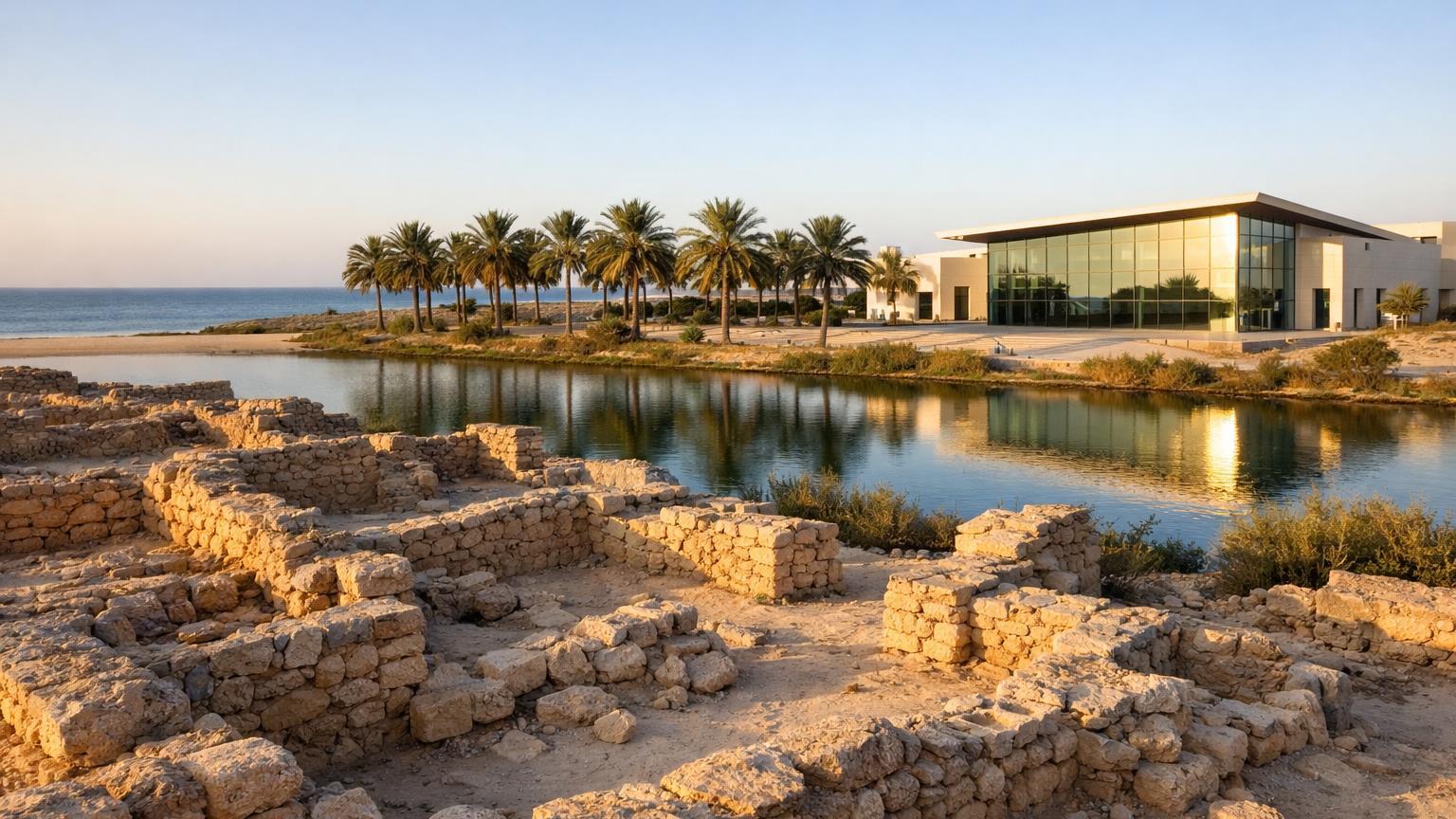
5. Salalah’s story in resin: Al Baleed park and museum
In Salalah, the spice story shifts from kitchen to caravan. Walk among Al Baleed’s low stone walls where warehouses once held sacks of frankincense, then step into the Museum of the Frankincense Land to follow sea routes that linked Dhofar to Rome, India, and East Africa. The pairing turns trade goods into a journey, with the scent of resin never far away. Practicalities are friendly. The museum follows an 8:00–14:00 and 16:00–20:00 schedule Saturday to Thursday, with Friday hours 16:00–20:00 [7]. Standard daytime hours of 8:00–14:00 are also published locally as a rule of thumb [8]. One ticket covers both the archaeological park and the museum, charged per vehicle; expect around 3 OMR per car as of 2026 [7][9]. It’s an easy half-day that ties neatly back to the Oman spice trails you tasted up north.
Good to know: Getting there: a short drive east of central Salalah, signed from Al Haffa. Best time: late afternoon for golden light over the ruins before the museum’s evening session [7]. Rough cost: around 3 OMR per vehicle for combined park-and-museum entry as of 2026 [9]. Insider tip: ask at the museum desk about frankincense grades; you’ll shop smarter at Haffa Souq later.
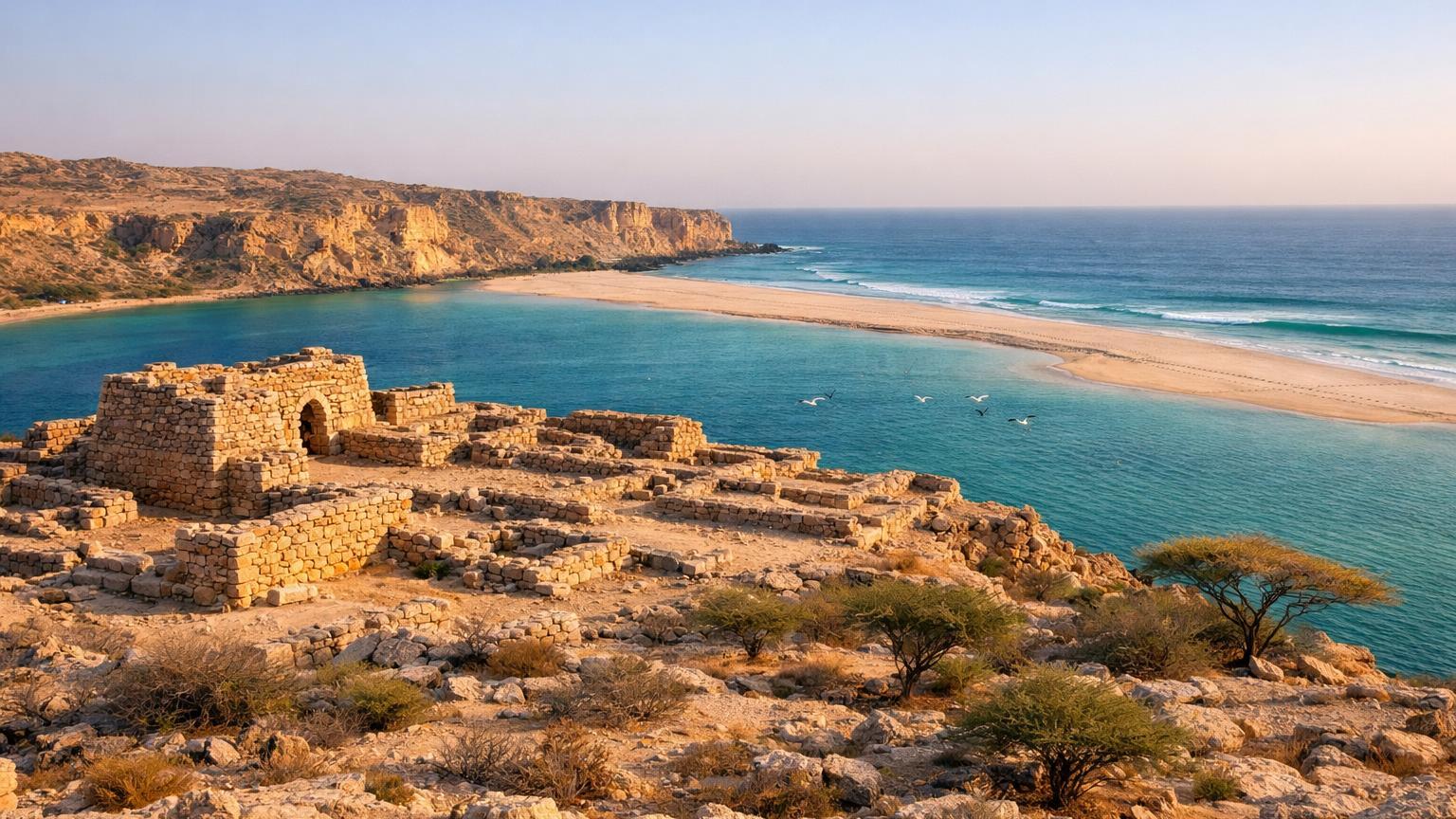
6. Where caravans met the sea: Sumhuram at Khor Rori
Stand on Sumhuram’s bluff and it’s easy to picture dhows nosing across the sandbar to load incense for distant ports. Today the ruins look inland to birds on the lagoon and outward to the Arabian Sea; either way, you’re staring at a waypoint on global taste. Sumhuram is one of four sites that make up UNESCO’s “Land of Frankincense,” alongside Al Baleed, Shisr, and Wadi Dawkah [10]. Visiting is straightforward. The archaeological park generally opens 8:00–18:00 and uses the same combined-ticket system as Al Baleed, with entry charged per vehicle; the published example is about 3 OMR per car as of 2026 [9]. Bring water, take your time on the gravel paths, and let the ocean breeze do the rest.
Good to know: Getting there: about a 30–40 minute drive east of Salalah on the coastal road. Best time: late afternoon for cooler temperatures and birdlife over the lagoon. Rough cost: around 3 OMR per vehicle, covering Sumhuram and Al Baleed on the same day as of 2026 [9]. Insider tip: stop at nearby Taqah for spiced grilled fish after your walk among the stones.
Final thoughts
Thread these six stops together and the Oman spice trails stop being abstract. They become markets, meals, and ruins you can touch, with frankincense and loomi linking Muscat to Salalah. Pack curiosity, go early where it counts, and let the aromas lead you from stall to shoreline.
Sources
- Opening & Closing Hours of Major Attractions (Arabica Orient Tours PDF) ↩
- Mutrah Souq Muscat Shopping Guide (Admission: Free) – OmanTour.in ↩
- Muttrah Fish Market – Snøhetta (Project page) ↩
- Muscat Municipality note on operating the new Muttrah fish market (facility counts) ↩
- Al Hamra and Misfat Al Abriyeen – Local Guide (museum fee approx. 2–3 OMR) ↩
- Bait Al Safah – Petit Futé (ticket information) ↩
- Museum of the Frankincense Land – Visitor Guide (hours; combined ticket) ↩
- Salalah Airport – Attractions page (standard hours note) ↩
- Sumhuram Archaeological Park – Khor Rori (hours; ~3 OMR per car; combined ticket) ↩
- UNESCO Nomination Dossier extract: Shisr, Khor Rori (Sumhuram), Al-Balid and Wadi Dawkah (‘Land of Frankincense’) ↩