Portugal is generous with coast, but the best stories travel by word of mouth. If you’ve been hunting for hidden beaches Portugal actually keeps for itself, this list leans in on local favorites. Expect sea‑stack coves, dune‑backed sands and sleepy lagoons where the only agenda is tide and light. We kept it practical: every spot here is open to visitors in 2026, and most are easy day trips from Lisbon, Porto or Faro. You’ll find short walks, small ferries and a few sandy tracks rather than big resort scenes. Pack water, a hat and a sense of adventure; the Atlantic will do the rest.
1. The wild cove under Cabo da Roca
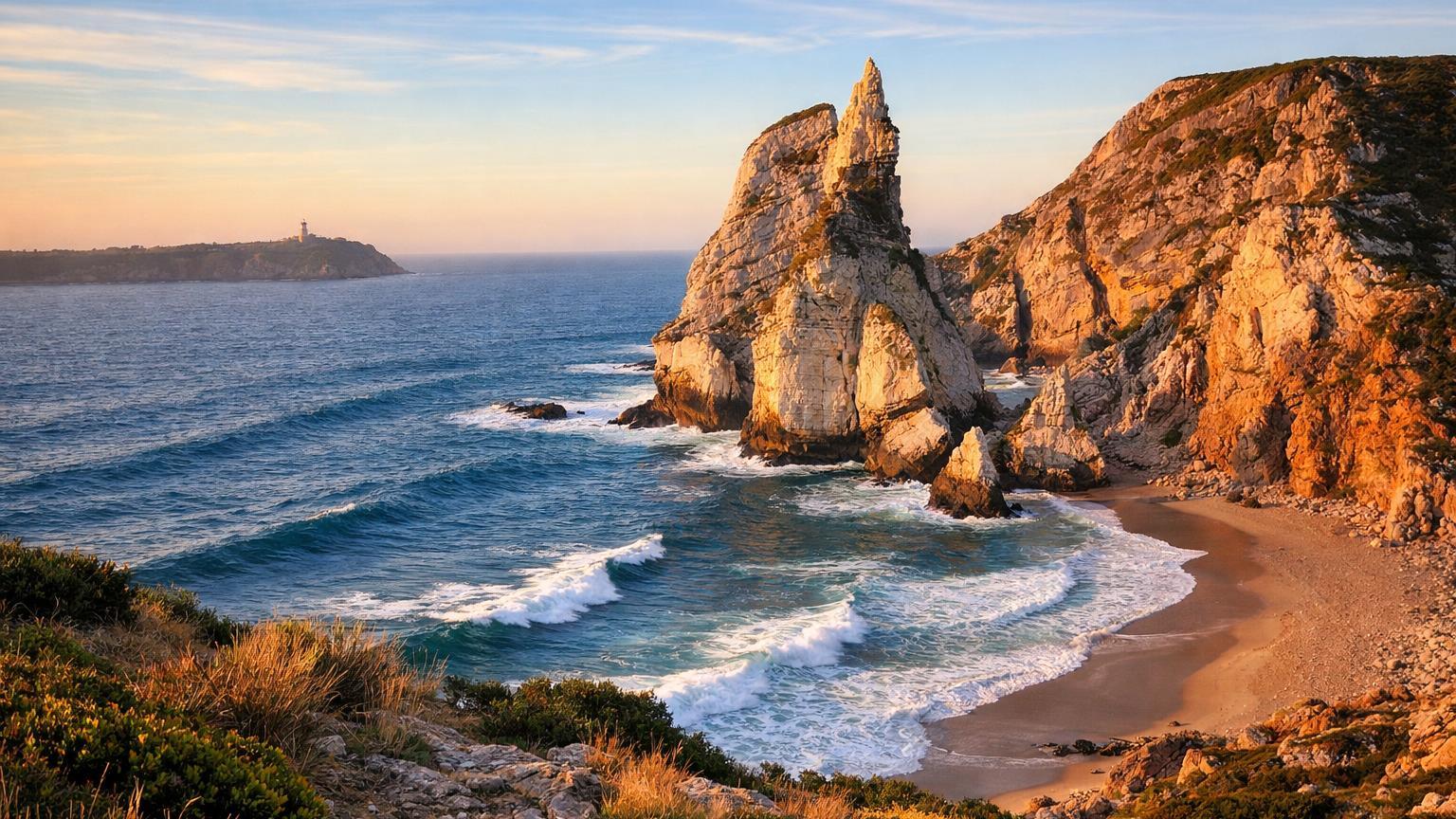
Just north of Europe’s westernmost cape, an unpaved track ends at cliffs that fall away to spear‑point sea stacks and a thin crescent of sand. Praia da Ursa is wonderfully raw. Getting down is half the legend: a dirt road leads to a footpath that zigzags steeply to the beach, so plan proper shoes and calm weather[1]. This is not a serviced strand. The national environment agency has flagged falls on these cliffs in the past, so give crumbly edges and overhangs a wide berth[2].
What you do get is elemental Atlantic: thundering surf, big sky and light that painters dream about. Stay for the late‑day glow on the rock spires and the long view back to Cabo da Roca’s lighthouse. On calm days bring a picnic and keep one eye on the tide. If you prefer buses to bends, services to the cape run from both Sintra and Cascais before a short roadside walk to the Ursa pathhead[3].
Good to know: Getting there: drive to Cabo da Roca then follow signs for “Praia da Ursa” to the clifftop path; or take buses toward Cabo da Roca from Sintra or Cascais and walk the final stretch[3]. Best time: mornings for softer light, late afternoons for golden rock. Rough cost: no tickets involved; budget for transport only. Insider tip: view the beach first from the cliff lookout, then choose the safer of the two descent paths in dry conditions[1][2].
2. Dunes, a river and a horizon of sand
North of Carrapateira village, Bordeira’s sandy drama begins where a river meets the sea. At low tide the beach grows and grows, creating lagoons and mirror‑smooth shallows that are glorious for paddling and photography[4]. Locals head to the boardwalk viewpoints on the Pontal da Carrapateira headland for widescreen Atlantic and a breeze‑cooled stroll between lookouts[6].
This coast feels remote yet it’s simple to reach by asphalt right to the dunes. Bordeira stretches for roughly 3 km, so even on summer days you can walk a few minutes and have your own patch of sand[5]. Surfers favor the outer banks while families linger by the river mouth when it’s calm. Bring layers; the wind can turn a hot day into perfect sweater weather in five minutes flat.
Good to know: Getting there: follow the paved road from Carrapateira signed to Bordeira; parking is near the boardwalks[4][6]. Best time: a couple of hours around low tide for natural pools and reflections[4]. Rough cost: no tickets involved; cafés sit back in Carrapateira. Insider tip: pair the beach with the short “Trilho das Marés” around Pontal da Carrapateira for grandstand views[6].
3. A ferry to silence on Aveiro’s sandspit
Across the lagoon from Costa Nova and Barra lies a long, quiet beach trimmed by protected dunes. The easiest way there is part of the charm: ride the short ferry across the Barra channel to São Jacinto, then walk or cycle to the reserve’s trails and broad Atlantic shore[7][8]. At the visitor center north of the ferry, you can register for walking routes that thread the pines and dunes to the beach access points[9].
It’s a wonderfully low‑tech day out: boardwalks over sand, wind‑rippled grasses, oystercatchers skimming the tideline. Summer brings lifeguards to the main beach, but you’ll still find long empty runs. Off‑season, it’s you, sea light and the gulls. Bring snacks; there’s little beyond village cafés once you leave the ferry.
Good to know: Getting there: bus to Forte da Barra from Aveiro, then the ferry to São Jacinto; the crossing takes about 15 minutes[9]. Rough cost: passenger returns are around €3.30 as of 2026; cars pay extra if you bring one[1]. Insider tip: bikes travel on the ferry, and the flat road to the reserve makes an easy ride to the boardwalk trailheads[7]. Best time: shoulder season for empty sands and soft light.
4. Where a white village points you to a tidal secret
Below the tiny hilltop of Cacela Velha, a barrier‑island beach sits across the Ria Formosa’s bright water. Most locals reach it by a short boat hop from the Sítio da Fábrica pier, a simple crossing that runs in season and drops you on a sandbar world of shells and calm shallows[10][11]. At very low tide some people wade, but the maritime authority discourages risky crossings here because channels shift and currents bite[12].
Once on the island you’ll find vast sand, tidal pools and long views to Tavira and Monte Gordo. Shade is scarce. Pack what you need and plan around the tides; the first and last boats are your natural timetable. This is one of those places where time slides—just you, seabirds and swirls of warm lagoon water.
Good to know: Getting there: drive to Sítio da Fábrica near Cacela Velha and take the seasonal boat to the beach, typically March to October[11]. Rough cost: boat tickets are about €1.50 return per adult as of 2026[10]. Best time: mid‑tide falling for growing sand and safe channels. Insider tip: after your swim, wander up to Cacela Velha for sunset over the ria from the church square.

5. An uninhabited island a few salty minutes from Faro
South of Faro’s old town, a narrow sandbar guards the ocean. Ilha Deserta lives up to the name: no village, just dunes, shells and one low‑key restaurant. Ferries and fast shuttles run year‑round from Faro’s marina, so it’s easy to swap city pavements for empty Atlantic within the hour[13][15]. In high summer the ferry is the slow scenic route; the shuttle nips across in about a quarter‑hour[15].
Prices are friendly: 2026 reports put the ferry at about €5 each way for adults, with frequent departures and simple booking at the operator booth by the water[14]. Land on the island’s small pier and choose your direction. East is longest and loneliest; west curves toward the cape’s low lighthouse. Either way, expect clear water and wide sky.
Good to know: Getting there: stroll to Faro Marina and take the regular ferry or shuttle to Ilha Deserta; check the current schedule posted for November 2026 and onward[13]. Rough cost: around €10 return for the ferry as of 2026; the faster shuttle costs more[14][15]. Best time: mornings before the wind picks up. Insider tip: walk 15–20 minutes from the pier to find your own dune‑sheltered spot.

6. A rock‑tunnel reveal on the Seven Hanging Valleys
Carved into honey‑colored cliffs between Benagil and Carvoeiro, Praia do Carvalho is a pocket cove with a party trick: you enter through a hand‑hewn tunnel and follow steps to the sand, emerging to cliffs arcing like an amphitheater around turquoise water[17]. It sits right on the famous clifftop walk, so hikers on the Seven Hanging Valleys trail often drop in for a swim and a snack stop; the route runs about 5.7 km one way between Vale Centeanes and Marinha[17].
Come early or late to catch the light on the rock and avoid the mid‑day rush. Facilities are minimal and shade is simply the cliff shadow. Park once, carry light, and take a last careful look up before settling in; the municipality advises keeping back from unstable faces on this coast[18].
Good to know: Getting there: drive toward Algarve Clube Atlântico and follow signs; a free clifftop car park sits roughly 800 m from the tunnel access[16]. Best time: early morning for calm water; late afternoon for golden rock. Rough cost: parking is free as of 2026[16]. Insider tip: bring a drybag if you plan to explore the small swim‑throughs at the cave mouths when the sea is settled.

7. Rock pools and quiet coves by Porto Covo
Just north of Porto Covo, Samoqueira is the last in a chain of little coves tucked into the Vicentina Coast’s dark cliffs. It’s small, photogenic and often hushed: low tide exposes rock pools and lacy inlets, high tide turns it into a dramatic amphitheater of foam[19]. The approach is short and steep, and that keeps it pleasantly low‑key even in August.
For planning, pin it on your map about 2.5 km north of the village, reached off the local M1109 coastal road[20][21]. There are no services on the sand, and shade is scarce, so think like a local: early swim, long coffee in Porto Covo, then a second dip when the wind eases. On calmer afternoons the water here can be clear enough to spot anemones in the pools by eye.
Good to know: Getting there: from Porto Covo, drive north on the M1109; the beach path drops from the roadside[21]. Best time: low tide for pools; evenings for softer light[19]. Rough cost: no tickets involved; bring coins if you plan a post‑swim espresso in town. Insider tip: pair Samoqueira with a sunset stop at the Pessegueiro Island viewpoint a few minutes south by car.
Final thoughts
Portugal’s shore still has secrets if you know where to look. These hidden beaches Portugal cherish—some a ferry away, some a sandy track—reward slow days and simple plans. Aim for low tide, light bags and curiosity; the Atlantic will meet you more than halfway.
Sources
- Praia da Ursa | VisitPortugal ↩
- APA environmental note on Praia da Ursa access risk (rockfall clarification) ↩
- Praia da Ursa: buses and access overview ↩
- Praia da Bordeira (Carrapateira) | VisitPortugal ↩
- Freguesia da Bordeira: Praia da Bordeira description (length) ↩
- VisitPortugal Algarve nature guide (Pontal da Carrapateira trail) ↩
- São Jacinto Ferry: how it works and fares (2026 updates) ↩
- Praia de São Jacinto | Câmara Municipal de Aveiro ↩
- Reserva Natural das Dunas de São Jacinto | Lonely Planet attraction info ↩
- Praia da Fábrica boat crossing (tickets and 2026 update) | Titus Boat Tours ↩
- Cacela Velha literary itinerary (boat seasonal note, walking at low tide) ↩
- Capitania do Porto de Tavira: advisory on risky crossings near Cacela Velha (2024) ↩
- Animaris Hop‑on Hop‑off / Ilha Deserta winter timetable (updated Nov 5, 2026) ↩
- NiT (2026): Ferry price to Ilha Deserta ↩
- AMT (Autoridade da Mobilidade e dos Transportes): Faro–Ilha Deserta crossing durations ↩
- Praias de Portugal: Carvalho Beach parking and access note ↩
- Praia do Carvalho tunnel access and Seven Hanging Valleys distance ↩
- Lagoa tourism brochure: cliff‑safety caution ↩
- Praia da Samouqueira | VisitPortugal ↩
- Praia da Samoqueira: location north of Porto Covo ↩
- AlentejoTurismo: Samoqueira access on M1109 (Sines municipality) ↩