Seoul eats well, but Busan seafood writes the love letters your taste buds keep. Start on the docks where boats unload the morning’s catch, then work your way to waterfront sashimi halls and clam grills with sea spray in the air. This guide gathers seven Busan seafood stops that are open and welcoming in 2026, with simple directions and realistic timing. You’ll find where to pick a live fish and have it sliced upstairs, where locals steam whole crabs, and where Busan’s cult-favorite fish cakes taste best. Bring an appetite and a little curiosity; the ocean will take care of the rest.
1. Pick-your-fish, eat-it-now at the port icon
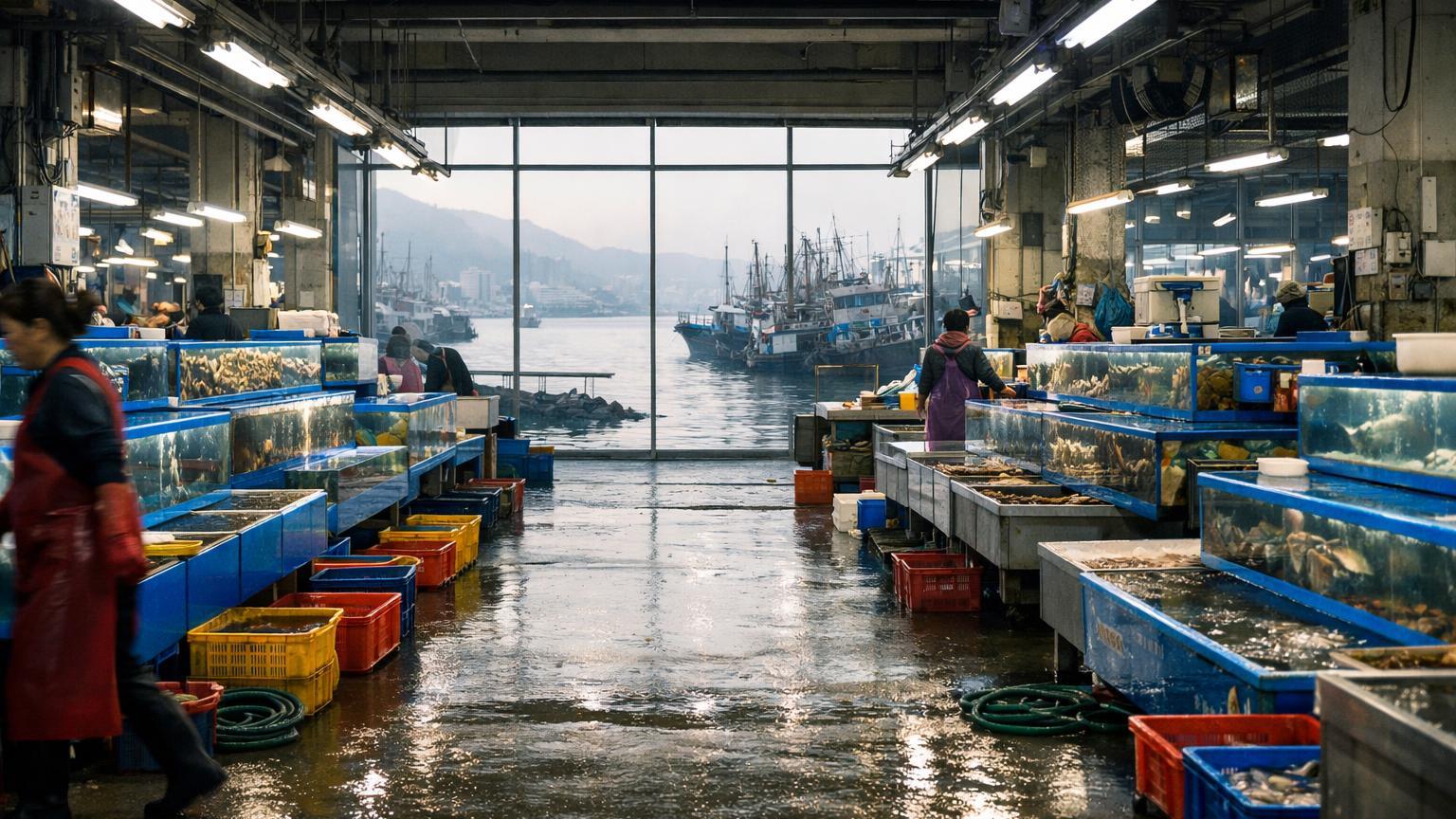
If you know one food address in Busan, make it Jagalchi Market. The ground floor brims with tanks; the upper floors cook what you choose into feasts of hoe (raw fish), stews and sides. Entry is free, the market runs roughly 05:00–22:00, and it closes on the first and third Tuesdays, so check your dates before you go[1].
Logistics are refreshingly easy. Take Metro Line 1 to Jagalchi Station and walk about five minutes from Exit 10; Nampo Station also works if you’re exploring nearby streets before lunch[2]. On busy days, slip up to the rooftop for sea views between courses; then head back down for a platter of sliced flatfish or rockfish. Order calmly, smile often, and don’t be shy about asking how you’d like it served.
practical_tips":"Getting there: Line 1 to Jagalchi Station, Exit 10, then about a 5-minute walk[2]. Hours and closures: roughly 05:00–22:00; closed the 1st and 3rd Tuesdays[1]. Cost: entry is free; upstairs restaurants add table or prep charges that vary by shop, so confirm before you sit[3].","visual_description":"Fluorescent-lit aisles of blue live-fish tanks opening to a glass wall with the harbor beyond; morning light catches wet floors and glints off scales."},{
Good to know: Getting there: Line 1 to Jagalchi Station, Exit 10, then about a 5-minute walk[2]. Hours and closures: roughly 05:00–22:00; closed the 1st and 3rd Tuesdays[1]. Cost: entry is free; upstairs restaurants add table or prep charges that vary by shop, so confirm before you sit[3].
2. Sashimi with bridge views at Millak
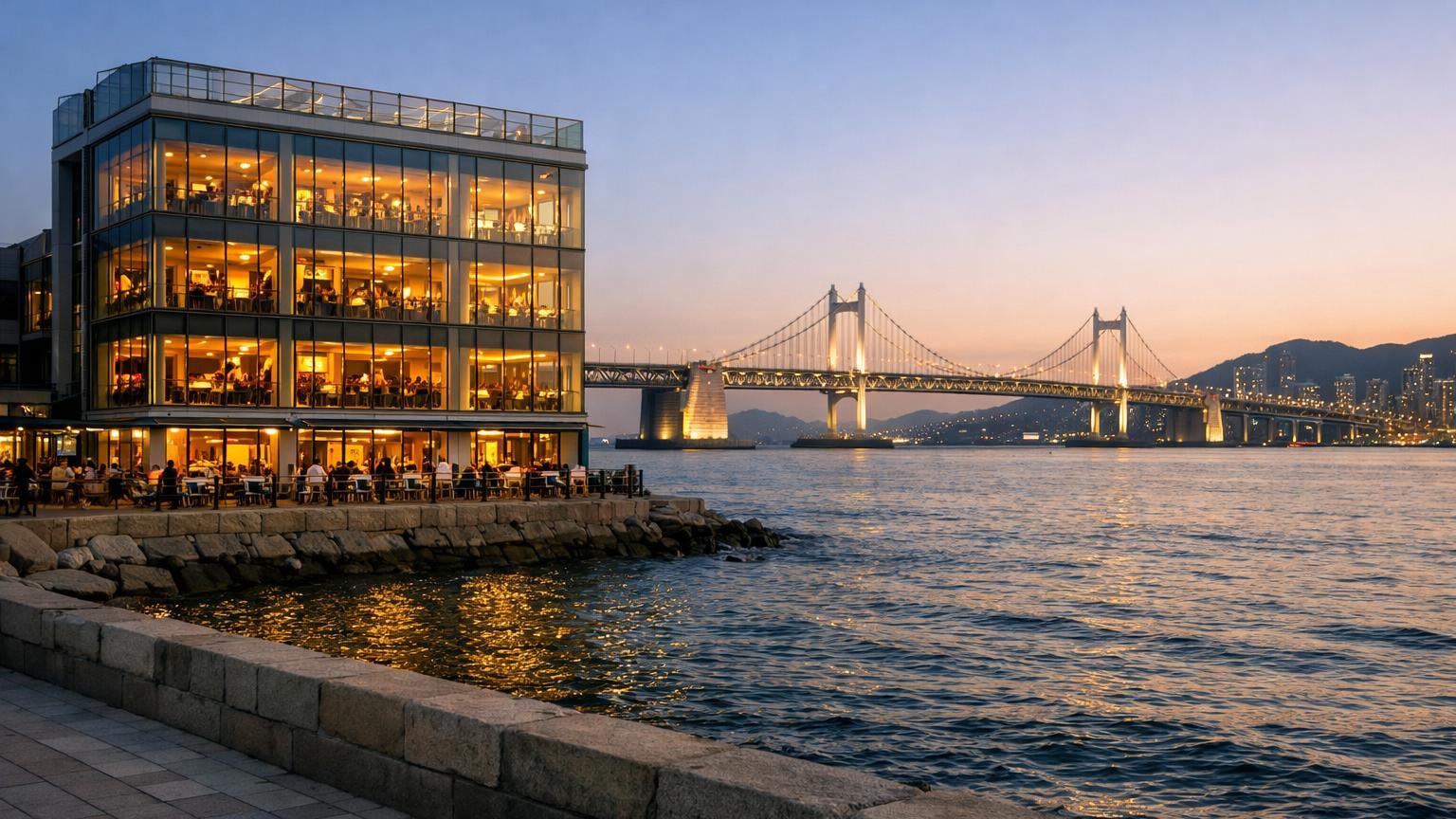
Gwangalli’s nightscape pairs perfectly with raw fish at Millak Hoe Town. Buy your seafood at the first-floor market, then head upstairs where restaurants slice it and set out sauces and greens, with full views of Gwangandaegyo Bridge after sunset[4]. Official hours run about 09:00–02:00 daily, varying by store[4].
If you prefer a casual feast, many people pack a takeaway tray and eat at Millak Waterside Park or along the seawall as the bridge lights up. From Gwangan Station (Line 2), it’s about an 18-minute walk; arrive before the dinner rush to snag a window table[4]. The mood is lively, the fish is fresh, and the sea does the decorating for you.
practical_tips":"Getting there: Gwangan Station Exit 3, then about an 18-minute walk to Millak Hoe Town[4]. Hours: around 09:00–02:00, varies by shop[4]. Insider tip: takeaway hoe is common; locals picnic with it at the waterfront nearby[3].","visual_description":"A tall glass-fronted building facing the bay; inside, bright dining rooms frame the arc of Gwangandaegyo Bridge glittering over dark water."},{
Good to know: Getting there: Gwangan Station Exit 3, then about an 18-minute walk to Millak Hoe Town[4]. Hours: around 09:00–02:00, varies by shop[4]. Insider tip: takeaway hoe is common; locals picnic with it at the waterfront nearby[3].
3. Steam a whole crab at Gijang
North of Haeundae, Gijang is where Busan families come for serious crab cravings. Tanks brim with snow and king crabs; restaurants weigh, steam and crack them table-side while you watch the legs turn sweet and flaky. The market keeps long hours, usually 07:00–22:00, and is listed open all year[5].
Access is simple: ride the Donghae Line to Gijang Station and walk about six minutes from Exit 1 to the market streets[5]. Prefer the bus? Rapid bus 1003 from Haeundae stops at Areum Park, a short walk away, which is handy if you’re staying by the beach[6]. Go earlier in the day for wider tank selection, and bring a little patience on weekends; the payoff is pure crab bliss.
practical_tips":"Getting there: Donghae Line to Gijang Station, Exit 1, about a 6-minute walk[5]. Bus option: rapid bus 1003 from Haeundae to Areum Park near the market[6]. Hours: generally 07:00–22:00, open year-round[5].","visual_description":"A lane of seafood tanks under colorful parasols; steam curls from restaurant doors while baskets of crabs clatter into stainless-steel steamers."},{
Good to know: Getting there: Donghae Line to Gijang Station, Exit 1, about a 6-minute walk[5]. Bus option: rapid bus 1003 from Haeundae to Areum Park near the market[6]. Hours: generally 07:00–22:00, open year-round[5].
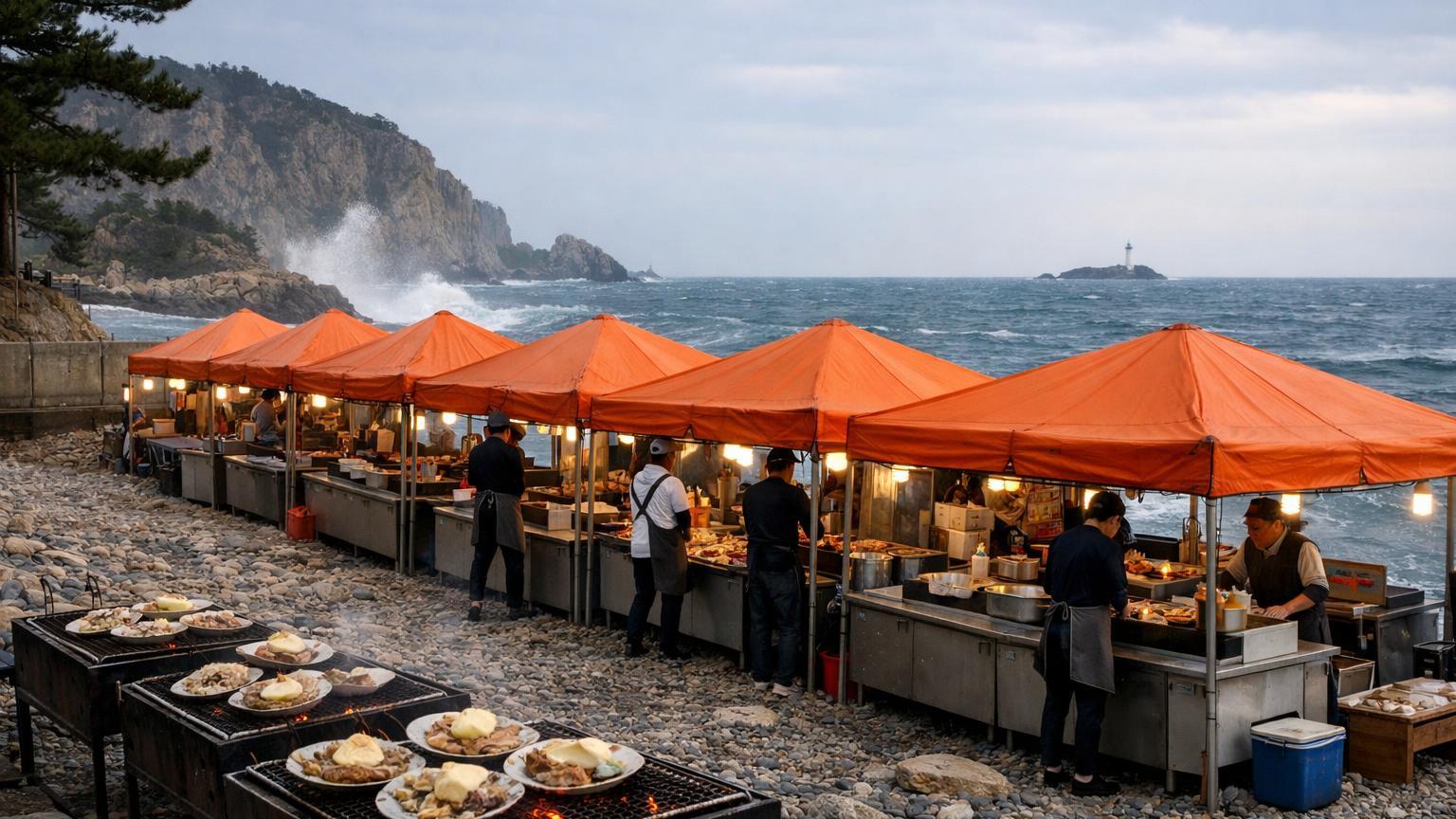
4. Grilled clams with sea spray at Taejongdae
On Yeongdo Island, the seaside shack lane known as Taejongdae Jagalmadang serves platters of scallops, abalone and razor clams grilled over hot pans while waves slap the rocks below. It’s a scenic detour after the lighthouse walk, and one of Busan’s most satisfying outdoor seafood fixes[7].
City buses 66, 88 and 101 from Busan Station (Line 1, Exit 7) run straight to the Taejongdae stop, so it’s easy to tag on a late afternoon meal with golden-hour light[8]. Bring some cash; several stalls are informal and may not run cards, especially if you wander in at sunset when the grills are busiest[9].
practical_tips":"Getting there: From Busan Station Exit 7, take buses 66, 88 or 101 to Taejongdae[8]. What to expect: open-air grilled shellfish tents by the cliffs at the park’s edge[7]. Money tip: carry cash since some stalls don’t accept cards[9].","visual_description":"Orange tent roofs line a pebbly cove; metal grills glow as staff flip buttered scallops, with whitecaps and a distant lighthouse in view."},{
Good to know: Getting there: From Busan Station Exit 7, take buses 66, 88 or 101 to Taejongdae[8]. What to expect: open-air grilled shellfish tents by the cliffs at the park’s edge[7]. Money tip: carry cash since some stalls don’t accept cards[9].
5. Busan fish cakes, bakery‑style on Yeongdo
Fish cakes are a Busan classic, and Samjin Eomuk’s Yeongdo flagship turns them into a choose‑your‑own bakery wall. The first floor is a shop where you pick hot bars, croquettes and steamed items; upstairs, a small history display and experience programs explain how Busan fish cakes rose from humble port fuel to beloved snack[1].
The Yeongdo main store lists daily shop hours of 10:30–20:30, with later closing on weekends in winter; check the operator’s notice if you’re visiting at the edge of the season[1]. The experience hall keeps a different schedule and typically closes on Mondays; reserve ahead if you want to join a class[10]. It’s a short hop from central Busan: head to Jungang Station Exit 2 or Nampo Station Exit 8, then continue a few blocks onto Yeongdo[1].
practical_tips":"Getting there: Jungang Station (Line 1) Exit 2 or Nampo Station Exit 8, then walk a few blocks onto Yeongdo to the main store[1]. Hours: shop roughly 10:30–20:30; the experience hall runs separate hours and usually closes Mondays[1][10].","visual_description":"A bright, bakery-like interior with rows of golden fish cakes behind glass; upstairs, a small exhibit with vintage photos and factory tools lit by spotlights."},{
Good to know: Getting there: Jungang Station (Line 1) Exit 2 or Nampo Station Exit 8, then walk a few blocks onto Yeongdo to the main store[1]. Hours: shop roughly 10:30–20:30; the experience hall runs separate hours and usually closes Mondays[1][10].
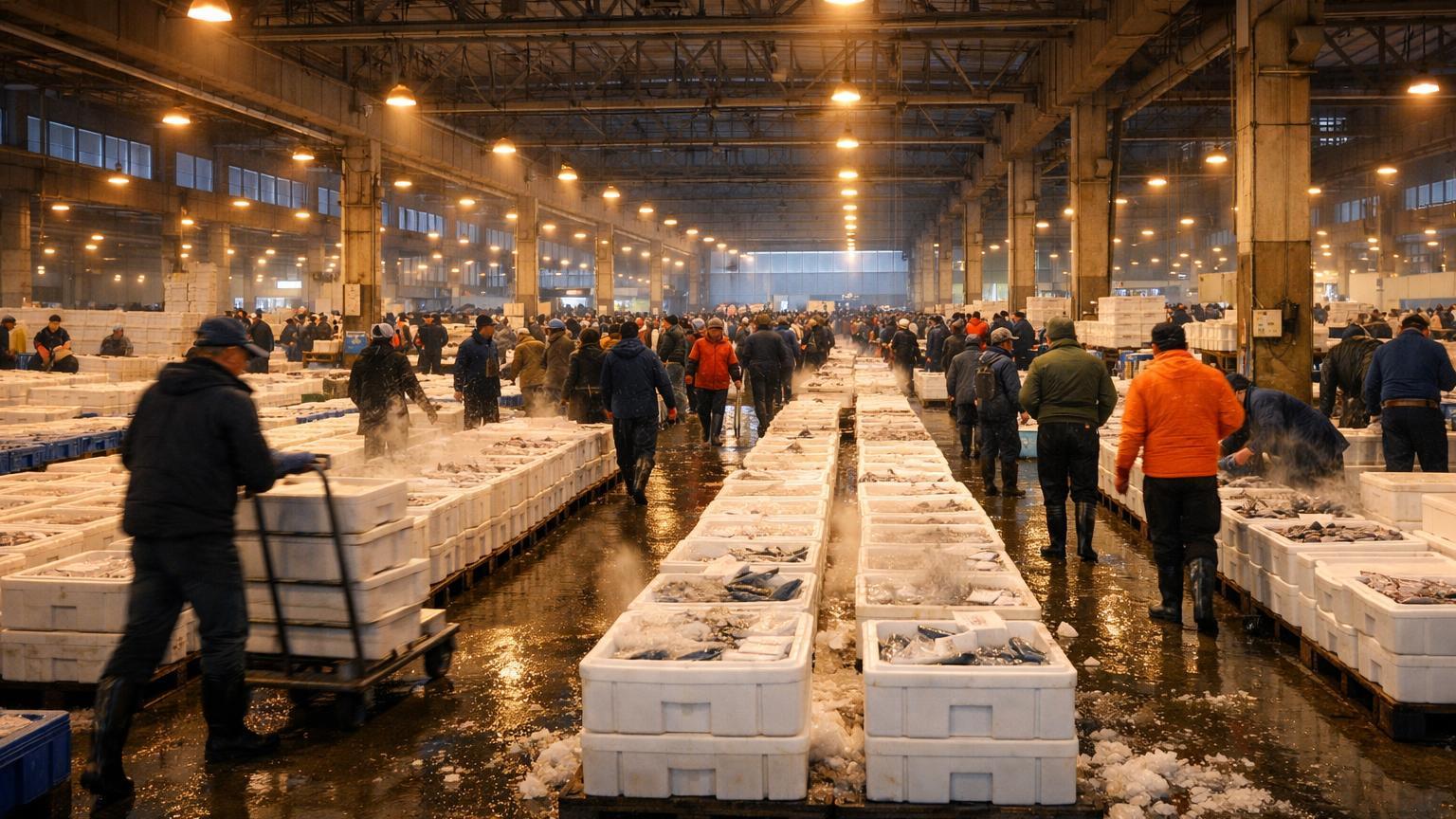
6. See the dawn auction at South Port
Set an early alarm for Busan’s big-league wholesale floor. The Busan Cooperative Fish Market buzzes from about 06:00 to 11:00 as boxes of mackerel, hairtail and squid change hands at lightning pace; note that Sundays are off[11]. To get there by transit, ride Line 1 to Nampo Station (Exit 8) and transfer to buses 7, 71, 9 or 9‑1 for the final leg to the market gate[10].
The market is currently in a multi‑year rebuild with a temporary auction hall in use, so operations continue even as facilities modernize; plan for a working environment and watch your step around wet floors and forklifts[12]. It’s a behind‑the‑scenes counterpoint to Jagalchi and a vivid reminder that Busan seafood starts here at sunrise.
practical_tips":"Timing: arrive between 06:00 and 08:00 to catch peak auction action; hours typically run 06:00–11:00 and close on Sundays[11]. Getting there: Nampo Station Exit 8 → buses 7, 71, 9 or 9‑1 to the final stop at the fish market[10].","visual_description":"A cavernous auction hall lit by sodium lamps; rows of iced fish boxes stretch to the back as auctioneers gesture and buyers in boots move fast."},{
Good to know: Timing: arrive between 06:00 and 08:00 to catch peak auction action; hours typically run 06:00–11:00 and close on Sundays[11]. Getting there: Nampo Station Exit 8 → buses 7, 71, 9 or 9‑1 to the final stop at the fish market[10].
7. Snack your way through Haeundae’s sea‑eel alley
Steps from the beach, Haeundae Traditional Market is a fun way to graze on Busan seafood without a sit‑down meal. Stalls fry squid and prawns, simmer fish‑cake skewers in broth, and grill hagfish in spicy sauce or coarse salt. The market sits about a five‑minute walk from Haeundae Station (Line 2) and typically runs 09:00–22:00 daily, though individual shop hours vary[3]. A local nickname, “Sea Eel Alley,” hints at what’s sizzling[13].
Go early evening when lights flip on, then drift out to the sand for a quick night view of the bay. If you’re here on a busy weekend, pick a shorter line and use the time to sip the free broth that often accompanies fish‑cake skewers.
practical_tips":"Getting there: Haeundae Station Exit 3, about a 5-minute walk; bus routes 39, 100, 115‑1, 141, 200 and 307 also stop at Haeundae Market[3]. Hours: generally 09:00–22:00 year‑round, varies by shop[3].","visual_description":"A covered lane glowing with warm bulbs over seafood griddles; steam rises from fish‑cake vats while, outside, beach lights shimmer a block away."}],
Good to know: Getting there: Haeundae Station Exit 3, about a 5-minute walk; bus routes 39, 100, 115‑1, 141, 200 and 307 also stop at Haeundae Market[3]. Hours: generally 09:00–22:00 year‑round, varies by shop[3].
Final thoughts
That’s the Busan seafood circuit: markets, clam tents, crab alleys and even a dawn auction. Mix two or three in a day, and save room for a late picnic by the water. If Seoul eats like a capital, Busan cooks like a coast—fresh, direct and generous.
Sources
- Jagalchi Market (부산 자갈치시장) — VisitKorea (Korea Tourism Organization) ↩
- Jagalchi Market: hours, access and tips — Korea Travel Atlas ↩
- Millak Hoe Town, the true taste of Gwangalli Sea — Visit Busan ↩
- Guide to Gwangalli Beach & Millak-dong — KoreaToDo ↩
- Gijang Crab Market — KoreaToDo ↩
- Taejongdae — Busan Geopark (English) ↩
- Taejongdae Jagalmadang (Clam Tents) — NOL World ↩
- Taejongdae Haenyeo Village & Jagalmadang tips — K‑Rambles ↩
- Samjin Eomuk Official Store listing (Yeongdo Main Store) ↩
- Directions — Busan International Fish Market (BIFM) ↩
- A Local’s Guide to Historic Downtown: Nampo-dong & Jagalchi Route — Visit Busan ↩
- Busan Cooperative Fish Market — DealBusan (KTO TourAPI–based listing) ↩
- Busan Haeundae Market — VisitKorea (KTO) ↩