Bhutan skiing is not a lift line or a piste map. It is a handful of high passes and farm valleys where winter lays down a short, sparkling canvas and locals swap hiking boots for curiosity. Bhutan skiing may be nascent, but the country even sent its first alpine skier to the Asian Winter Games in 2025, a neat sign that the idea has legs—and edges[1]. This guide follows six places where snow, stories and access come together. Expect road passes that sometimes shut for a day, temples above the treeline, and views that make you pause before you click in. Bring fitness, skins and patience. The reward is quiet powder and a travel tale people haven’t already heard at brunch.
1. Where a prophecy meets powder
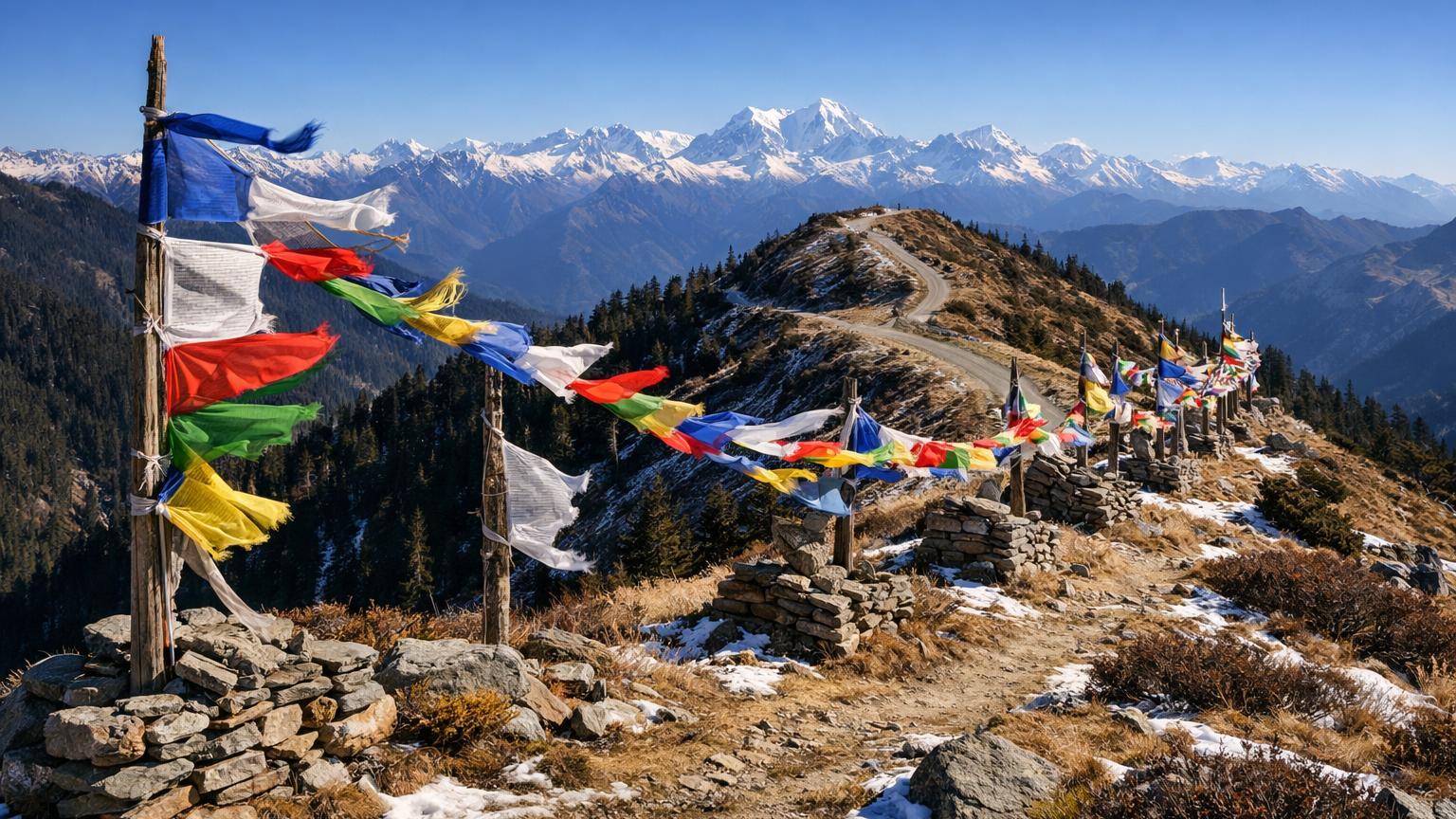
Bhutan’s highest motorable pass tops out around 3,988 meters, a windswept saddle linking Paro and Haa with long views toward sacred peaks on clear days[2]. After fresh snowfall the ridge meadows turn into a natural practice ground for short, mellow skin-ups and cautious glides. It’s not a resort; it’s a high road that sometimes disappears under white, then reappears just in time for tea.
Chele La also carries a recent chapter of spiritual history. The Duduel Jangchub Chorten, built here in fulfillment of an 18th‑century prophecy, stands sentinel over the pass; skiers tend to click out for a quiet look before dropping a turn or two below the crest[3]. The pass can close without warning after deep winter storms, so this is a fair‑weather window project rather than a promise[4].
practical_tips: From Paro or Haa, drive to the crest and scout leeward meadows; avoid cornices and road cuts. Best chance of skiable snow is mid‑December to February, but closures are possible[4]. Budget the Sustainable Development Fee of around US$100 per adult per night, plus a one‑off visa fee of around US$40, both as of 2026[5][6]. Insider tip: stash hot tea; the wind here has opinions.
Good to know: From Paro or Haa, drive to the crest and scout leeward meadows; avoid cornices and road cuts. Best chance of skiable snow is mid‑December to February, but closures are possible[4]. Budget the Sustainable Development Fee of around US$100 per adult per night, plus a one‑off visa fee of around US$40, both as of 2026[5][6]. Insider tip: stash hot tea; the wind here has opinions.
2. Army masks and midwinter turns
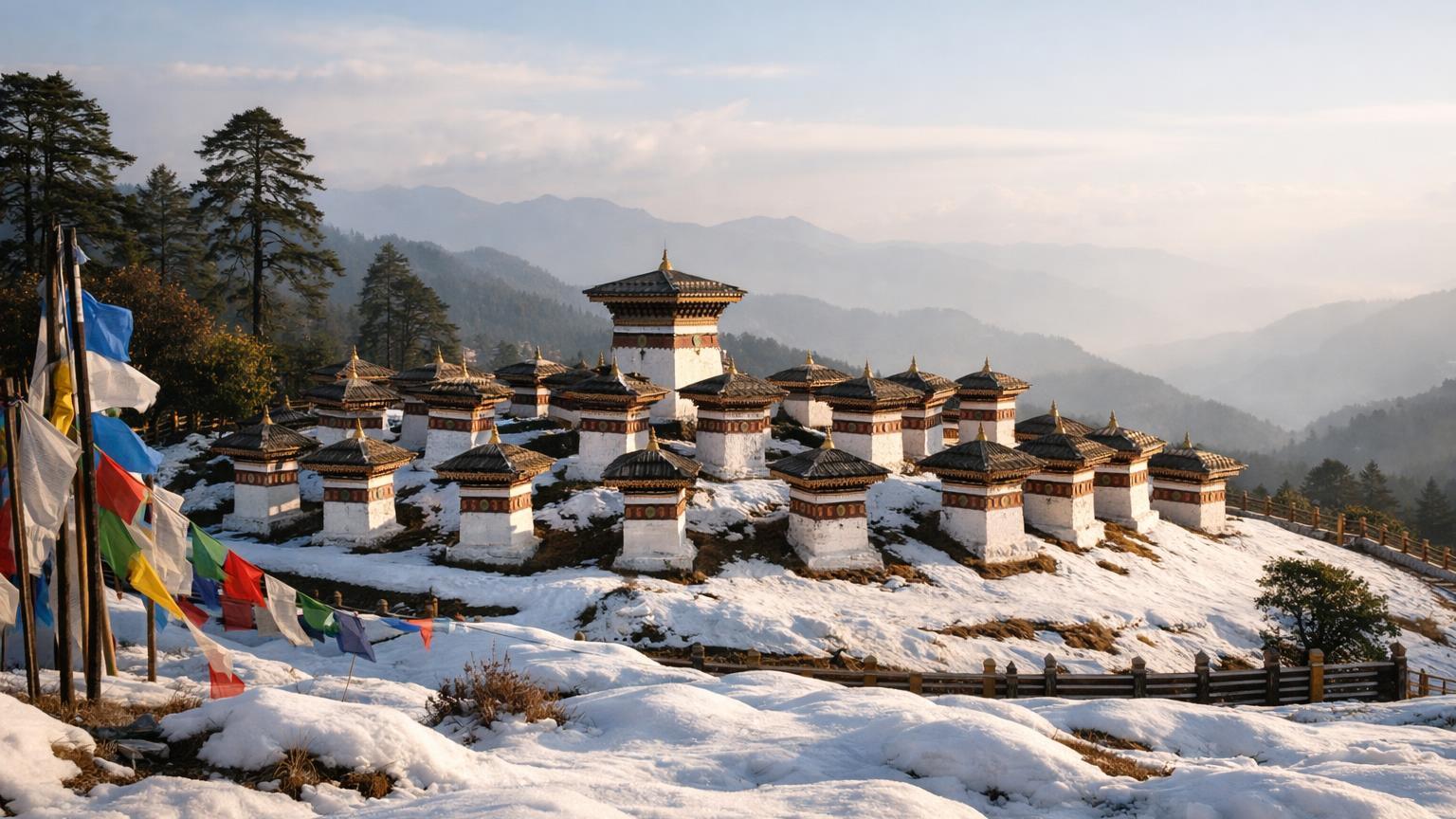
Dochula’s 108 chortens sit at roughly 3,100 meters, and every 13 December the Royal Bhutan Army performs the Druk Wangyel Tshechu here, the only festival of its kind in Bhutan—sometimes with frost crunching underfoot[7]. On snowy days the open fields by the pass become a gentle place to shuffle on skins, make a few careful turns, then wander among the memorial chortens between laps.
This is also one of the country’s most diligently maintained winter road crests. Snow clearing equipment is deployed here each season, which helps reopen the highway quickly after storms and keeps the pass accessible for short ski forays when conditions turn friendly[8]. If the sky lifts, the views toward Himalayan giants do the rest of the storytelling.
practical_tips: Reach by road from Thimphu en route to Punakha; pull over only where plows leave safe space. The festival is on December 13 each year; arrive early if you plan to watch and ski the same day[7]. Snow can fall in mid‑winter; check road status before driving[8]. Insider tip: morning light is best for photos before cloud builds over the ridge.
Good to know: Reach by road from Thimphu en route to Punakha; pull over only where plows leave safe space. The festival is on December 13 each year; arrive early if you plan to watch and ski the same day[7]. Snow can fall in mid‑winter; check road status before driving[8]. Insider tip: morning light is best for photos before cloud builds over the ridge.
3. A quiet central saddle with a short ski window
Yotong La is a high, rounded pass at about 3,436 meters, knitting together central Bhutan’s Trongsa and Bumthang valleys[10]. When winter systems sweep the spine of the country, the crest collects a tidy blanket. Locals know that closures can happen, but when crews reopen the road the verges and nearby meadows make for a low‑risk shuffle to test skins and wax.
The pass occasionally features in winter traffic reports alongside Chele La and Dochula, a sign that the snow line dips here often enough to matter[9]. That same rhythm makes Yotong La one of the most practical places to try a first Bhutan glide between valley stays—easy to reach, easy to bail if weather turns.
practical_tips: Drive the east–west highway between Trongsa and Bumthang, watching for plowed pullouts and lee slopes free of brush. Peak snow chance is mid‑December to February; monitor local bulletins for closures[9]. Costs beyond gear transport are your standard trip expenses in Bhutan, including the SDF noted earlier[5]. Insider tip: pair a morning skin with an afternoon visit to Jakar’s cafes when the mercury drops.
Good to know: Drive the east–west highway between Trongsa and Bumthang, watching for plowed pullouts and lee slopes free of brush. Peak snow chance is mid‑December to February; monitor local bulletins for closures[9]. Costs beyond gear transport are your standard trip expenses in Bhutan, including the SDF noted earlier[5]. Insider tip: pair a morning skin with an afternoon visit to Jakar’s cafes when the mercury drops.
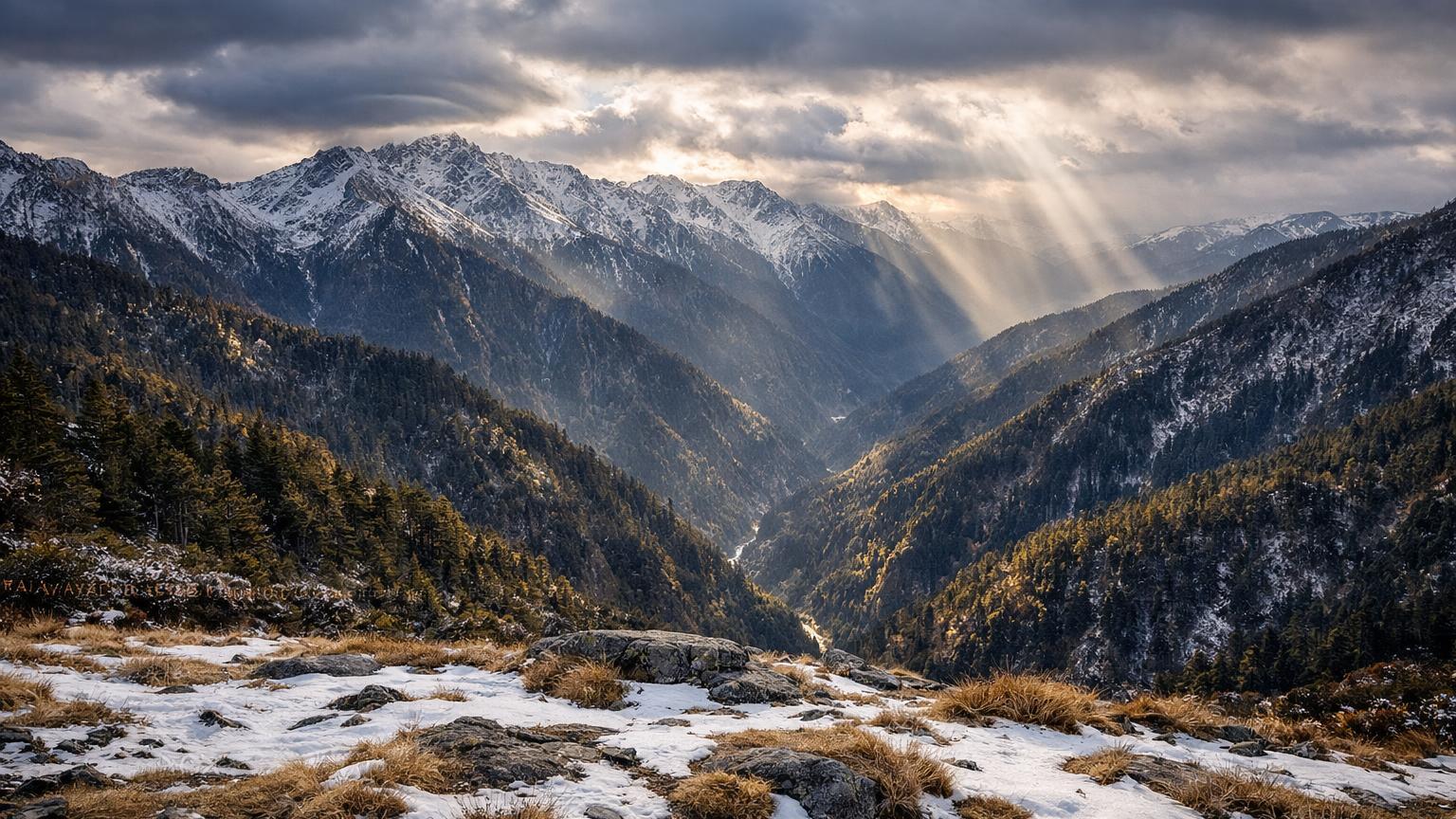
4. Bhutan’s east–west hinge, inside a national park
Crossing Phrumsengla National Park, Thrumshing La is the east–west highway’s crux and, in deep winter, occasionally its pause button. The corridor sits around the 3,700‑plus‑meter mark and can be snowbound, with official records noting snowfall of about 16.5 inches on the Sengor side during a notable event[11][12]. Ski‑wise, that means opportunistic touring on roadside benches when the road reopens, and a very early start for any safe, small laps.
Geographically, Thrumshing La is Bhutan’s second‑highest road pass, historically tying central and eastern populations across the Donga range[13]. The setting is moody and wild: cloud forest below, wind‑scrubbed heaths above, and a highway that corkscrews between them. On clear days, the light is crisp enough to read the grain in every snowflake.
practical_tips: Base from Ura or Sengor and watch the park road advisories in winter; the plows usually define your ski window[11][12]. Best odds for snow are mid‑winter, but closures are possible; keep flexible days[11]. Your baseline costs remain the SDF per‑night levy and visa fee listed earlier[5][6]. Insider tip: carry microspikes for the plowed but icy margins when scouting lines.
Good to know: Base from Ura or Sengor and watch the park road advisories in winter; the plows usually define your ski window[11][12]. Best odds for snow are mid‑winter, but closures are possible; keep flexible days[11]. Your baseline costs remain the SDF per‑night levy and visa fee listed earlier[5][6]. Insider tip: carry microspikes for the plowed but icy margins when scouting lines.
5. Views, yak country and wind‑smoothed turns
Pele La, another broad Himalayan saddle, marks the divide between western and central Bhutan and sits above 3,400 meters, with famed views to Jomolhari and other peaks on clear days[14]. After a snowfall the open sections near the crest can serve up wind‑smoothed patches for a few satisfying turns, the kind that make you laugh at how little vertical can deliver so much joy.
It’s also a major transport gateway, which means the crest is kept in regular condition and is part of the country’s primary highway network[15]. Skiers should think of Pele La as a short‑session venue rather than a mission: a roadside recon when the plows have passed, then a warm bowl of noodles in the next village.
practical_tips: Drive between Wangdue and Trongsa; pull into safe lay‑bys and steer clear of traffic. Target mid‑winter after fresh snow on the ridge[14]. No extra permits are required beyond your standard entry paperwork and fees already noted[5]. Insider tip: keep goggles handy; Pele La’s wind can turn snowflakes into very small, very fast projectiles.
Good to know: Drive between Wangdue and Trongsa; pull into safe lay‑bys and steer clear of traffic. Target mid‑winter after fresh snow on the ridge[14]. No extra permits are required beyond your standard entry paperwork and fees already noted[5]. Insider tip: keep goggles handy; Pele La’s wind can turn snowflakes into very small, very fast projectiles.
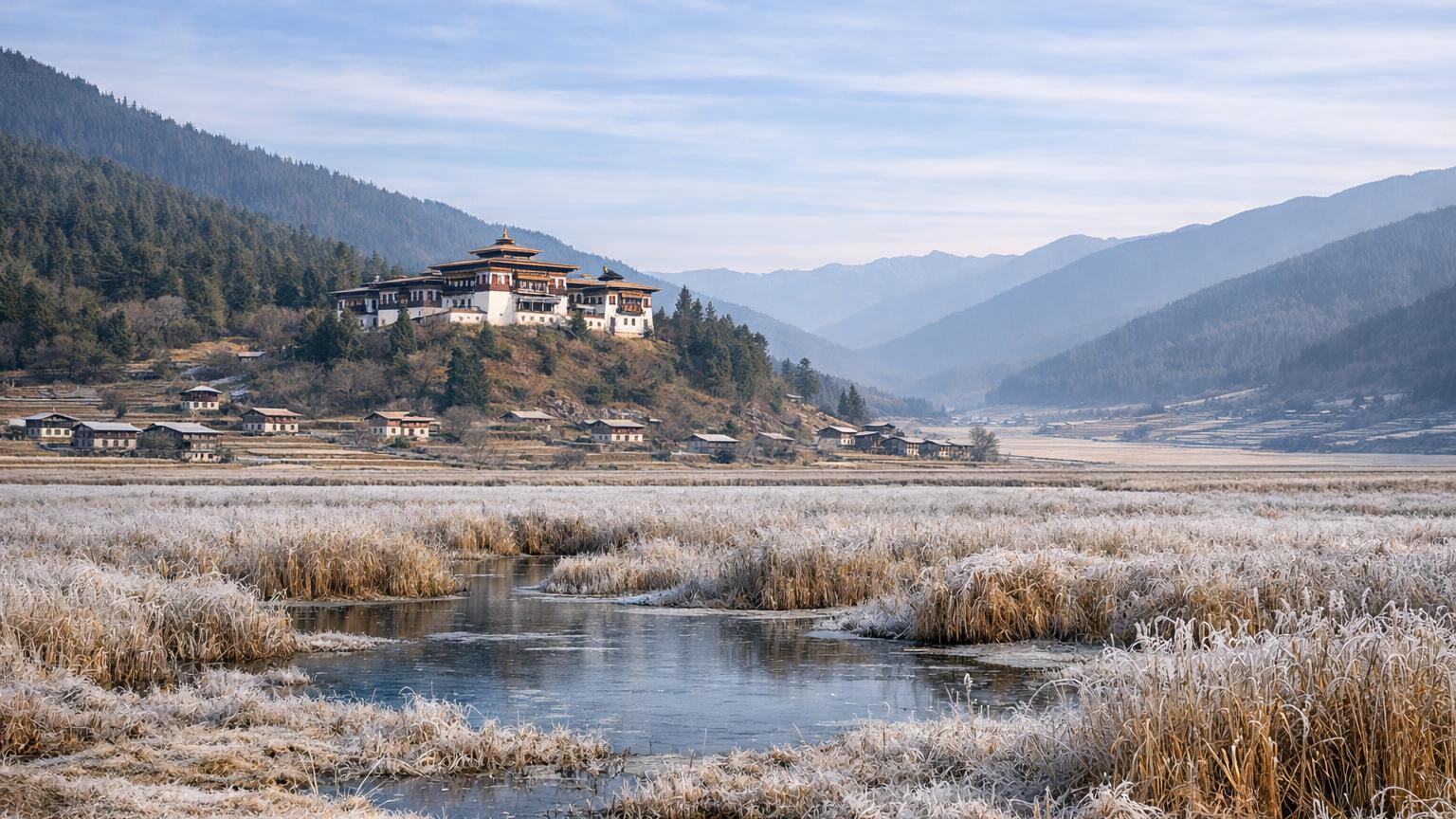
6. Cranes, quiet roads and a careful glide
Phobjikha is a glacial bowl known for wintering black‑necked cranes and the cliff‑side Gangtey Monastery. The valley occasionally sees winter snowfall, and at around 2,900 meters the farm roads can offer a gentle cross‑country shuffle when blanketed in white—always staying on roads to avoid sensitive crane meadows[16][17]. If you prefer your Bhutan skiing meditative, this is the place.
Culturally, the valley hosts winter festivals tied to the cranes, which adds a wonderful, contemplative rhythm to a snow day. Roads in western Bhutan typically remain passable in winter, so pairing a morning glide with monastery time is feasible when forecasts cooperate[17].
practical_tips: Access by road from Wangdue; bring lightweight touring gear and plan short, flat routes on farm roads only. Aim for mid‑winter if you hope for snow; verify conditions locally[16]. There are no extra fees beyond the SDF and your visa[5][6]. Insider tip: carry binoculars and enjoy the cranes from a respectful distance before you click in.
Good to know: Access by road from Wangdue; bring lightweight touring gear and plan short, flat routes on farm roads only. Aim for mid‑winter if you hope for snow; verify conditions locally[16]. There are no extra fees beyond the SDF and your visa[5][6]. Insider tip: carry binoculars and enjoy the cranes from a respectful distance before you click in.
Final thoughts
Bhutan’s snow story isn’t about chairlifts; it’s about timing, road passes and respect. If you pack skins, curiosity and a flexible plan, these six places can turn a cold front into a small slice of Bhutan skiing, with culture and tea breaks built in. That’s a pretty good trade for a few early alarms.
Sources
- Alpine skier Chencho Dorji to make history for Bhutan at Harbin AWG ↩
- Chele La Pass ↩
- Rew-Sang-Choe at Chelela – Dzongkhag Administration, Haa ↩
- Does It Snow in Bhutan? Where, When & How Much ↩
- Visa | Bhutan Travel ↩
- Bhutan Visa & Passport Guide | Drukair Singapore ↩
- Dochula Pass: The 108 Chortens, the View, When to Go | Little Bhutan ↩
- Machineries and equipment for better road maintenance – Bhutan Today ↩
- Snowfall brings traffic along some passes to a standstill - BBSCL ↩
- The breathtaking road to Yotong La – DangerousRoads.org ↩
- Phrumsengla National Park, Bhutan – what to expect | Meridiela ↩
- Heavy snowfall blocks highways – NCHM Compendium of Extreme Events, Vol. 2 (PDF) ↩
- Thrumshing La ↩
- Pele La ↩
- Pelela Pass: A pristine landscape marred by mounting waste issues - BBSCL ↩
- Phobjikha Valley ↩
- Bhutan in Winter: Clear Skies, Warm Stoves and Quiet Valleys — Bhutan Luxury Travel ↩