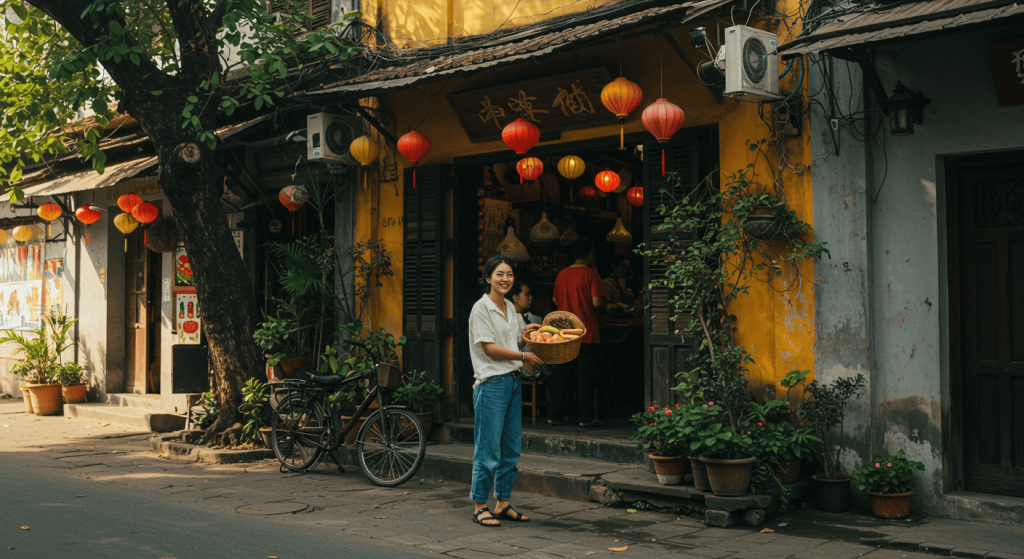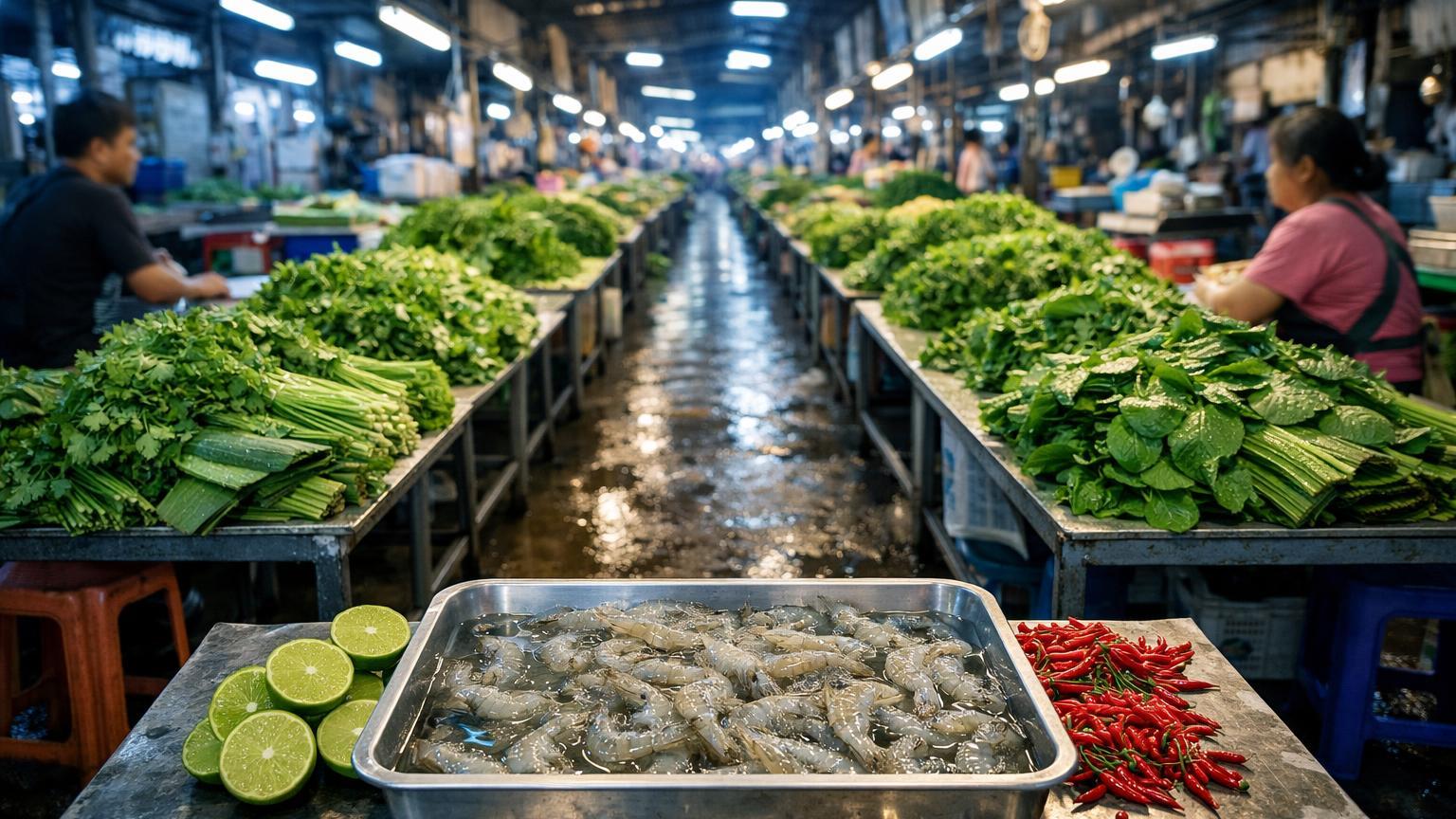
Bangkok market dishes are a crash course in the city’s tastes, if you know what to ask for. The trick is that many of the best plates look modest, are scribbled only in Thai, or appear at hours most visitors aren’t roaming. This guide spotlights six delicious market finds locals love, from peppery noodle soup to ice‑cold royal rice. You’ll get the exact market to aim for, what to say at the stall, and a realistic idea of cost as of 2026. No grandstanding—just flavor, a little context, and practical steps to actually eat them. Bring small bills, an appetite, and a sense of culinary curiosity.
1. They’re jumping: a salad that really moves
If you spot a bowl that seems to wriggle, you’ve found goong ten—“dancing shrimp.” Tiny freshwater shrimp are tossed with lime, fish sauce, herbs and chilies, then served while still lively. Khlong Toei, Bangkok’s biggest wet market and the city’s pantry, is where cooks come to buy and where adventurous eaters can catch this dish at its source[1]. Arrive curious and unhurried; the market is a fascinating maze of butchers, herb vendors and seafood counters before dawn.
It’s not just spectacle. The quick lime‑spiked seasoning keeps the flavor bright, and vendors pride themselves on clean prep. Best energy is in the very early morning, when wholesale runs at full tilt and stalls set up for breakfast seekers[2]. For cost, expect about the price of a street snack: reports of 50 baht a portion coexist with more recent ranges that put it between roughly 100 and 220 baht depending on vendor and size, so budget around the middle[3][4]. One bite and you’ll understand why some Bangkok market dishes never leave the neighborhood chatter.
Good to know: Getting there: ride the MRT to Queen Sirikit National Convention Centre or Khlong Toei; the market lies within a short walk of both[1]. Best time: pre‑dawn to early morning for selection and photos[2]. Rough cost: around 50–120 THB per portion, depending on stall and size, as of 2026[3][4]. Insider tip: if the idea of live shrimp gives you pause, ask for extra lime and herbs; vendors will usually oblige.
2. Shrimp‑paste fried rice you finish at the table
Khao khluk kapi looks like a simple plate of fried rice until you notice the company it keeps: sweet braised pork, fine egg ribbons, shredded green mango, shallot, long beans, dried shrimp and chilies come as a colorful halo. You mix each bite yourself so that shrimp‑paste savor, sweetness and crunch land in balance[7]. The result is satisfying and surprisingly light—one of those Bangkok market dishes you rarely see on tourist menus but locals know by heart.
Wang Lang Market is the perfect daytime hunt for it. Stalls here feed hospital staff, students and neighbors, so prices stay friendly and turnover is constant; most plates run in the 30–60 baht window as of late 2025–2026[6]. It’s busy but relaxed, with food nooks tucked between fabric, shoe and dessert lanes.
Good to know: Getting there: cross the river by ferry to Wang Lang (Siriraj) Pier and follow the lane between the pier and Arun Amarin Road—the food stretches right along it[5]. Best time: late morning to mid‑afternoon. Rough cost: around 30–60 THB per plate, as of 2026[6]. Insider tip: ask for extra green mango and a lime wedge to brighten the shrimp‑paste rice[7].
3. Chili‑dip sets that outshine the curry line
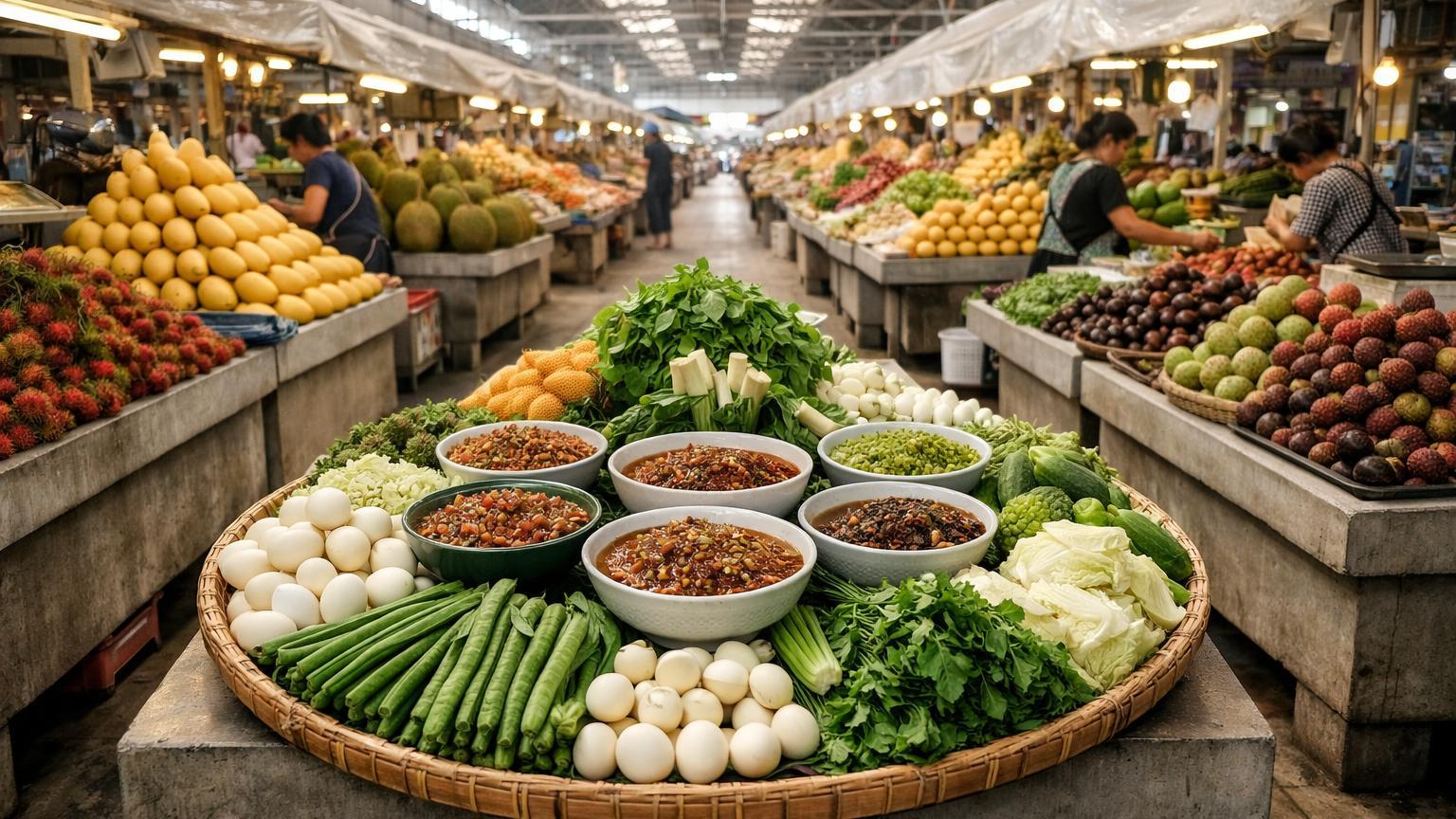
Or Tor Kor is where growers’ produce meets cooked‑food precision. Among the standouts are nam prik sets: a punchy chili relish—crab‑roe rich, salted‑egg silky or herb‑green—surrounded by raw and blanched vegetables, often with a hard‑boiled egg and a wedge of fried mackerel. It’s the Bangkok lunch you eat like a tasting plate, and it explains why locals obsess over the city’s markets more than restaurants.
Prices here reflect quality but still feel fair: a typical cooked‑food plate in the market’s food court runs about 50–120 baht, which is excellent for the produce and prep on show[8]. Getting in is easy, too: the market sits beside MRT Kamphaeng Phet, exit 3, opposite Chatuchak’s sprawl[9].
Good to know: Getting there: MRT Kamphaeng Phet, exit 3; you’ll walk straight into the market[9]. Best time: morning for peak produce and shorter queues around the cooked‑food hall. Rough cost: plan 50–120 THB for a nam prik set as of 2026[8]. Insider tip: ask the vendor which relish pairs best with the day’s vegetables; many will offer a tiny taste first.
4. Summer‑only royal cool: rice served on ice
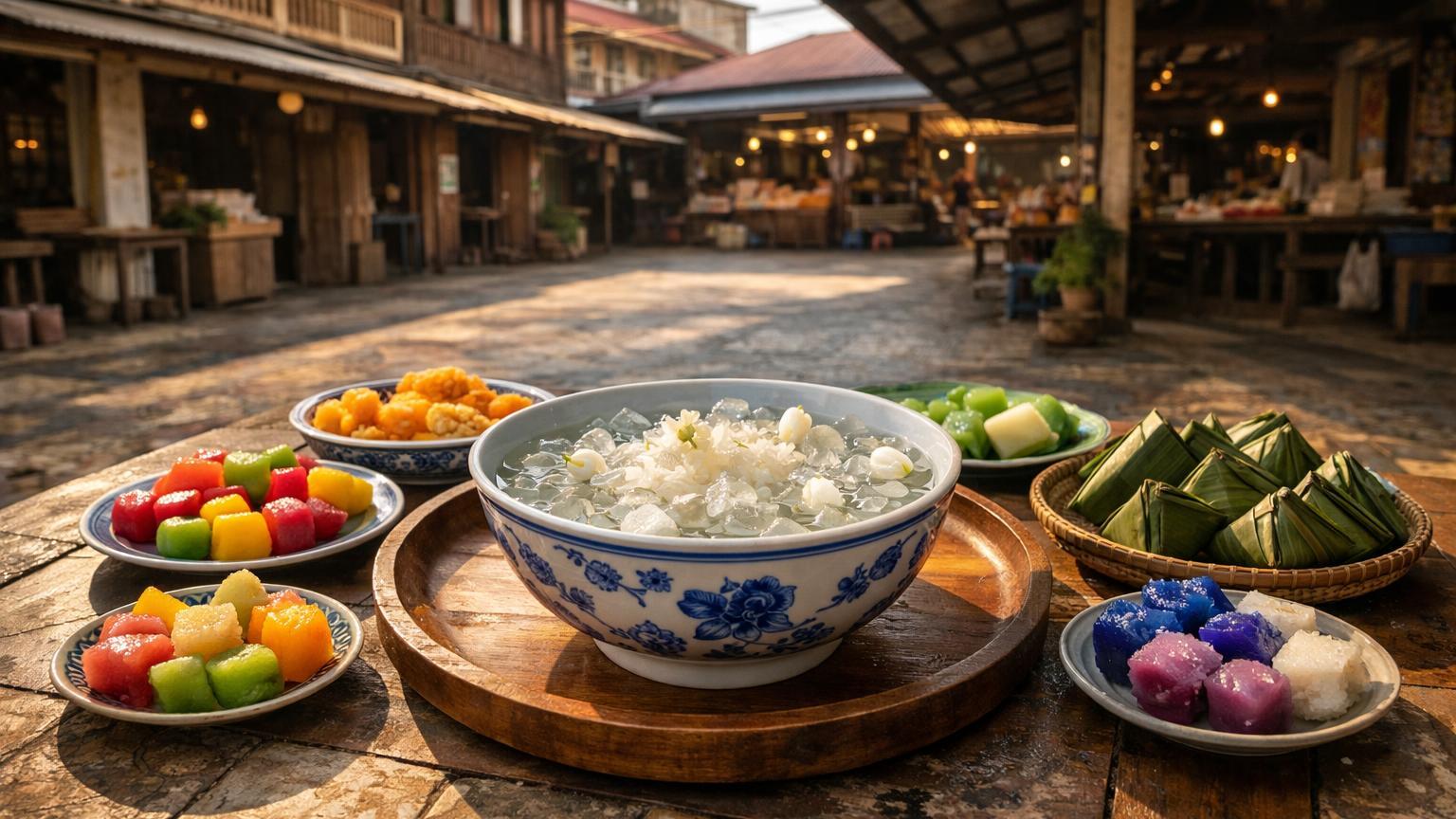
Khao chae is Bangkok’s most civil way to handle the heat: jasmine‑scented rice submerged in iced, perfumed water with a tray of meticulous side bites—fried shrimp paste balls, candied fish, and sweet‑salty pickled radish among them. Nang Loeng, Bangkok’s first land market and still a daytime food hub, is one of the easiest places to try it without booking a restaurant table[10].
Traditionally served in the hot months, this is a seasonal star: Thai sources note it appears from about March to May, peaking around Songkran when the city swelters[12]. Prices at the market stall that specializes in it are wonderfully down‑to‑earth, with recent diners citing sets around 35–40 baht[11].
Good to know: Getting there: aim for Nang Loeng Market off Nakhon Sawan Road; most food stalls keep daytime hours and many wind down by late afternoon[10]. Best time: late morning when full trays are out. Rough cost: about 35–40 THB per set as of 2026[11]. Insider tip: eat salty to sweet, taking small bites between sips of the scented rice water—it’s designed to refresh, not to rush[12].
5. Garlic‑chive dumplings that vanish by dusk
Talat Phlu’s Teochew roots show up as soft, translucent dumplings stuffed with garlic chives, steamed or pan‑fried until just crisp at the edges. The area’s food has worked the same corners for generations, and by late day the market streets wake up again along Khlong Bangkok Yai with snacks, rice plates and desserts[13]. Order a mixed box, grab a stool, and dip each piece into the sweet‑spicy sauce—simple and addictive.
Prices stay friendly: recent local roundups put chive dumplings at about 10–15 baht per piece or 50–60 baht for a small set, which makes sharing an easy call[14]. It’s a great stop before or after an amble among Chinese shrines and old shophouses that anchor the neighborhood.
Good to know: Getting there: head to Talat Phlu’s old market streets around Thoet Thai Road and Khlong Bangkok Yai; food stalls cluster near the historic rail line and throughout the lanes[13]. Best time: late afternoon into evening when cooked‑food stalls pick up again[13]. Rough cost: 10–15 THB per piece, or 50–60 THB per set as of 2026[14]. Insider tip: ask for half‑and‑half—steamed for softness, fried for crunch—in one box.
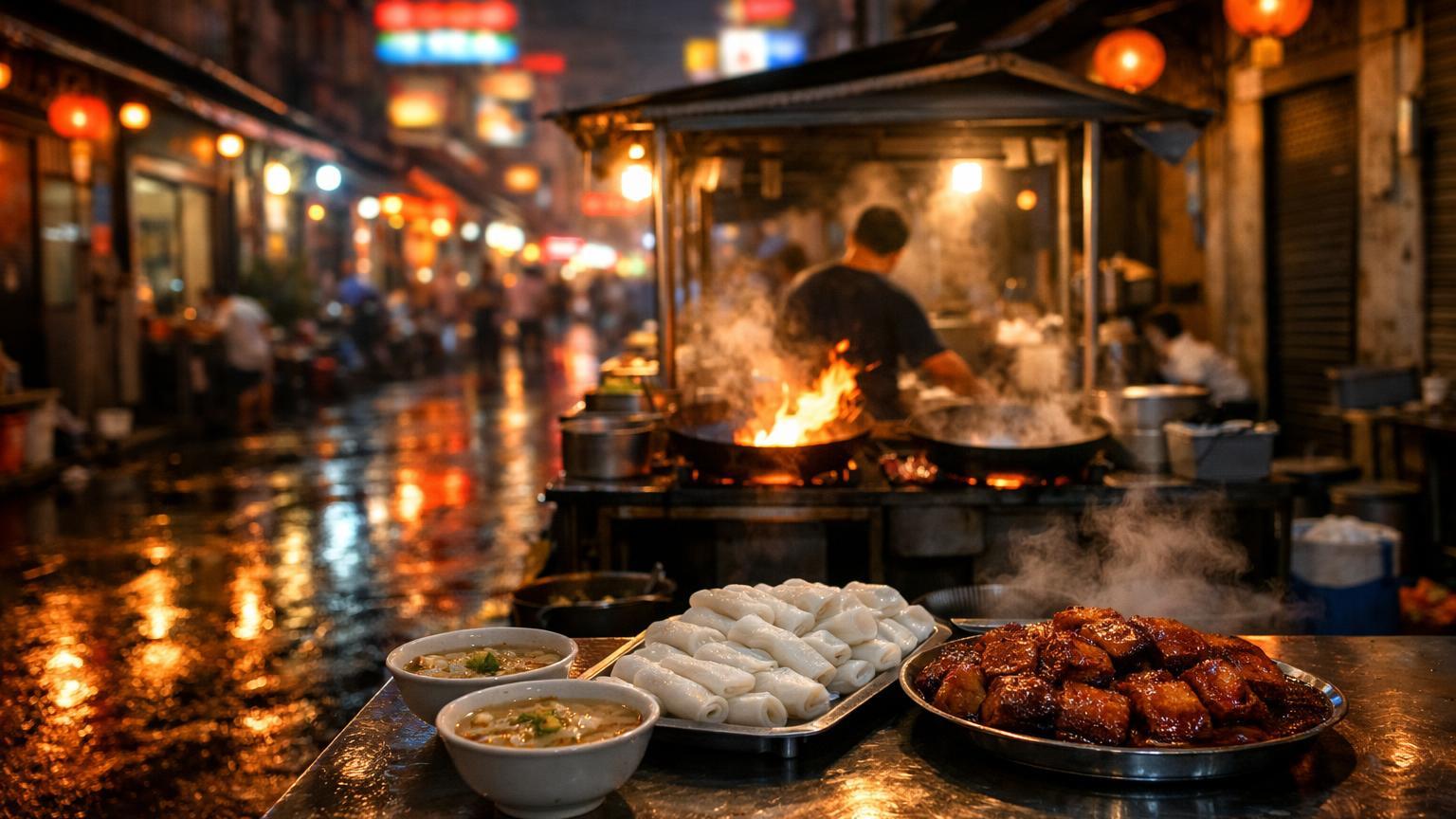
6. Peppery roll‑noodles that outsmart the queue
Chinatown’s most comforting bowl might be guay jub: rolled rice‑noodle tubes in a peppery clear pork broth, usually crowned with crisp pork belly. Nai Ek is the enduring favorite, and prices are clear: bowls run 70, 100 or 150 baht depending on size as of May 2026[15]. The broth is white‑pepper bold, the noodles pleasantly chewy, and the pork belly shatters like good pastry.
Long lines form but move quickly, and the hours help. The shop serves from morning until half past midnight, so you can time it for a late breakfast or a post‑night‑market supper[16]. If you like heat, add the house chili vinegar; if you want gentler, skip the offal and stick to crispy pork and egg.
Good to know: Getting there: find Nai Ek near Yaowarat Soi 9 in the heart of Chinatown’s market strip; it’s a short stroll from the neon action to a stainless‑table seat[15]. Best time: come outside peak dinner to dodge tour groups; late lunch is sweet. Rough cost: 70/100/150 THB per bowl depending on size, as of 2026[15]. Insider tip: the line for takeaway often moves faster than dine‑in, and the noodles travel well if you’re nearby[16].
Final thoughts
Markets are where Bangkok’s flavor rules are written. Pick two or three from this list of Bangkok market dishes, go early or late when each shines, and you’ll taste the city the way locals do. Keep small change handy, smile, and let the cooks steer you to what’s freshest today.
Sources
- Khlong Toei wet market, Bangkok | Travelfish ↩
- Best Local Markets in Bangkok: 11 Authentic Spots to Explore ↩
- In Bangkok, this high-crime slum is a foodie gem serving up live shrimp and bile - CNA ↩
- What to eat in Bangkok? — 12+ top, must try & best street food in Bangkok ↩
- Wang Lang Market - Thonburi: hours, prices, map and how to get there | Bangkok Through My Eyes ↩
- Wang Lang Market - What to do at Wang Lang Market in Bangkok? ↩
- Khao khluk kapi ↩
- Best Bangkok Food Markets 2026: Where to Eat ↩
- Or Tor Kor Market | Bangkok, Thailand | Attractions - Lonely Planet ↩
- Nang Loeng Market (AM 2026 Thailand) ↩
- ร้านข้าวแช่เพชรบุรี ตลาดนางเลิ้ง (Phetchaburi Khao Chae at Nang Loeng Market) – Wongnai ↩
- ข้าวแช่ อาหารตามฤดูกาล (Seasonal Khao Chae) – Suan Sunandha Rajabhat University Library ↩
- Talat Phlu | Thai Holiday Guide ↩
- คู่มือท่องเที่ยวสำหรับตลาดพลู (Trip Moments) ↩
- Nai Ek Roll Noodle BANGKOK – Must‑Have Peppery Guay Jub and Crispy Pork Belly in Yaowarat Chinatown ↩
- Yaowarat Street Food (2026): What to Order, Stall by Stall – Rent Thai Friend ↩