Dreaming of Sri Lanka beach villages where the loudest noise is a palm frond clacking in the breeze? You’re in the right surf spray. The island splits its beach seasons neatly: the south and west coasts are driest December to March, while the east coast shines May to September[1][2]. That handy switch means you can chase sunshine year‑round without crossing an ocean. Below you’ll find seven laid‑back coastal communities with wide sands, fish‑flip sunsets and room to breathe. Each entry includes how to reach it, a realistic cost for a classic local activity, and one small trick that keeps the crowds away. Your friends will forgive the bragging. Eventually.
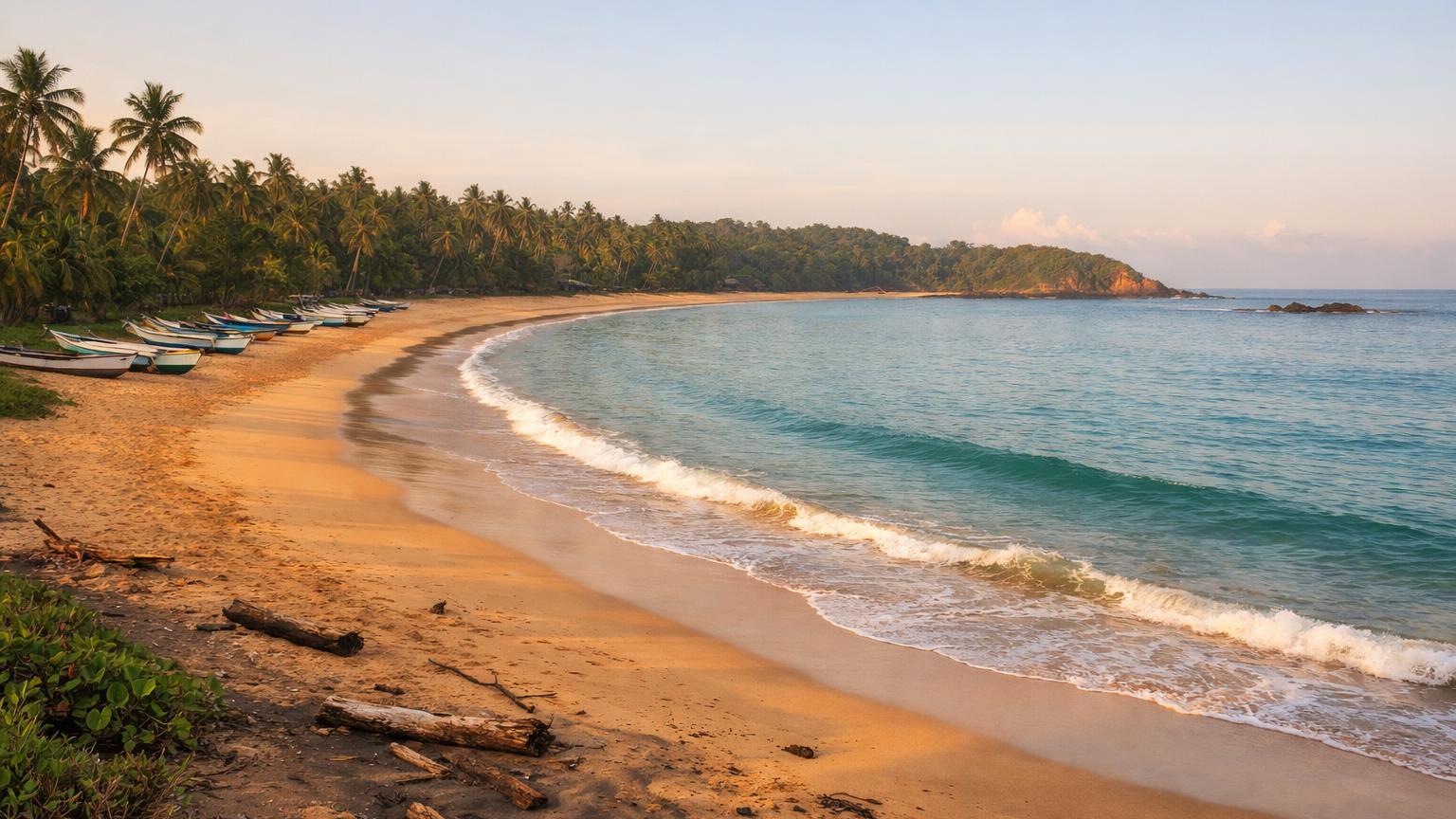
1. A curving bay made for slow mornings
Talalla is a long, quiet crescent between Matara and Dikwella, the kind of place where the day’s biggest decision is hammock or ocean. To get here, ride the coastal‑line train to Matara and finish with a short tuk‑tuk through coconut groves; the line runs daily services and is the easiest hop for this corner of the island[3]. It’s still very much a village, with fishermen sliding boats over the sand at dawn and beach cafes pouring lime soda at sunset.
If you like your saltwater with a stretch, Talalla’s shorefront retreat runs drop‑in yoga and Pilates in open‑air shalas steps from the sea. It’s calm, mildly addictive, and an excellent way to justify a second curry lunch. Drop‑in classes are from around $15 as of 2026, plus VAT, and schedules are posted weekly[4]. For swimming, pick the calmer mornings in the south‑coast dry season, when the sea is usually friendlier to long, easy laps[1].
Good to know: Getting there: Train to Matara on the Coastal Line, then a short tuk‑tuk to Talalla[3]. Best time: December to March for the south coast[1]. Rough cost: Drop‑in yoga around $15 plus VAT in 2026[4]. Insider tip: Walk to the rocky eastern point for sunrise; you’ll often have the beach to yourself.
2. The little horseshoe where boards rule
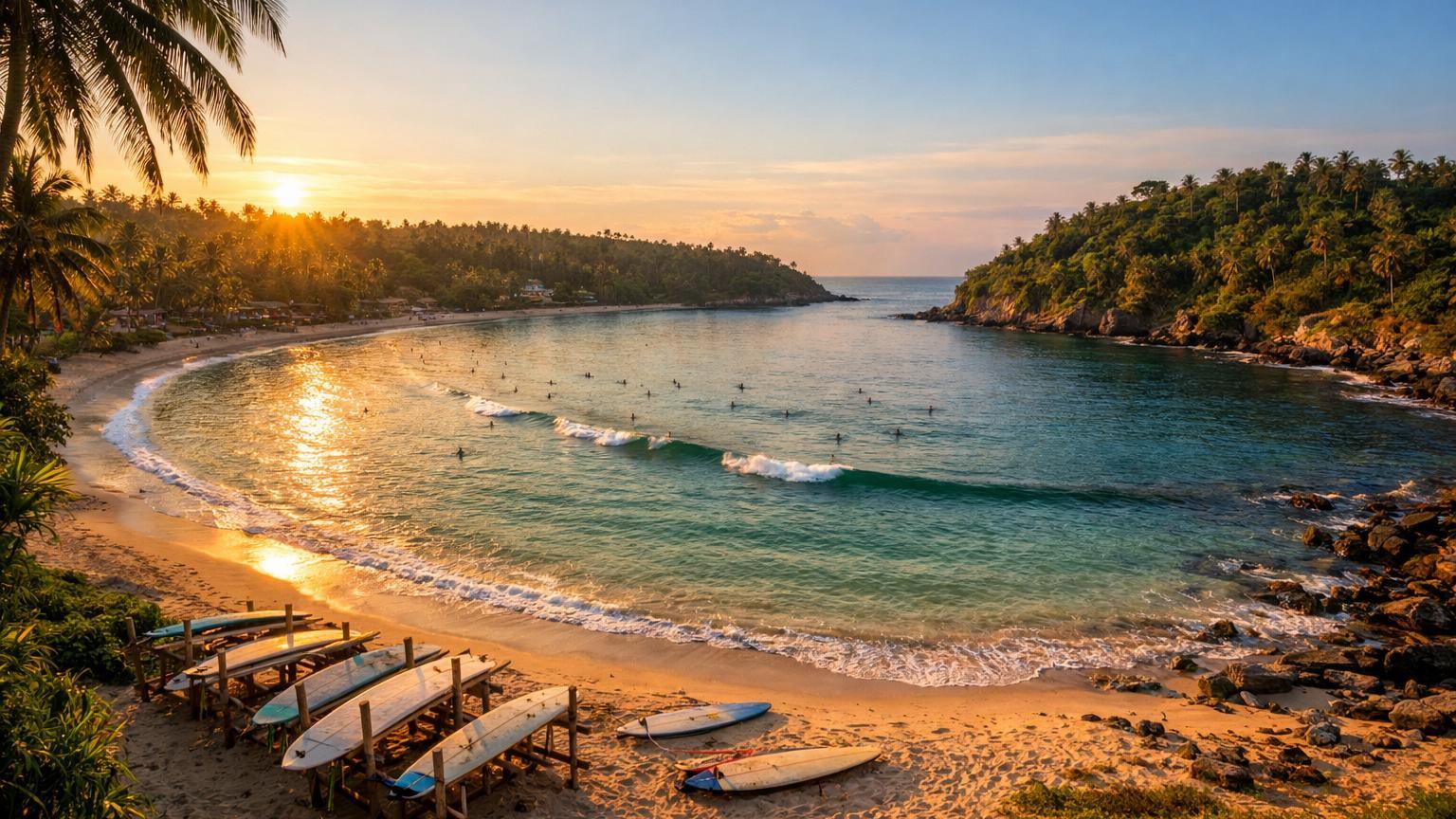
Tucked behind a headland near Dikwella, Hiriketiya is a palm‑wrapped horseshoe bay with a playful beach break inside and a reefier line‑up along the right. The curve keeps things compact: board shacks, cafés and the water are all a flip‑flop stroll apart. It’s one of the most social of Sri Lanka beach villages, but step a block inland and you’re back among frangipani and bird chatter.
If you’ve ever wanted to stand on a wave, this is where to try. Board rentals run around LKR 1,000–1,500 per hour and private lessons hover roughly LKR 4,000–6,000 including a board, as of 2026[5]. On small days the inside is forgiving for first timers; when sets pulse, watch the reef section from the sand or paddle out only with guidance. Post‑session, wander to Dikwella’s long main beach for a quieter sunset and a plate of fish curry that tastes like someone’s aunt still runs the kitchen.
Good to know: Getting there: Buses and tuk‑tuks from Matara reach Dikwella; Hiriketiya sits a few minutes south of town. Best time: December to March for more consistent calm mornings on the south coast[1]. Rough cost: Board rental around LKR 1,000–1,500 per hour; private lesson roughly LKR 4,000–6,000 in 2026[5]. Insider tip: Walk the headland path for a bird’s‑eye view of the bay before you paddle.
3. Turtles by moonlight, not Instagram light
Rekawa is a quiet fishing village with a wide, wild beach where, on many nights, female sea turtles come ashore to nest. The community‑run Turtle Watch starts by the visitor center at 8 pm and heads to the sand when scouts signal activity, keeping lights off and distances respectful so the animals can do their ancient work in peace[7]. It’s not a show; sometimes you wait, sometimes you whisper, and often you leave with sand in your shoes and a bigger sense of time.
The program operates year‑round and your ticket supports the beach patrols that protect nests from poachers and dogs. As of 2026, listed prices are LKR 2,000 for foreign adults and LKR 1,000 for children, with lower local rates; arrive before 9 pm to check in and hear the briefing[6]. Bring patience and a sweater: sea breezes can turn cool after midnight, and the walk can stretch if a turtle chooses a far corner of the beach.
Good to know: Getting there: Rekawa sits east of Tangalle; arrange a tuk‑tuk round‑trip from town. Best time: Dry months on the south coast, December to March, have easier beach conditions, though nesting can happen any time[1][7]. Rough cost: Turtle Watch ticket around LKR 2,000 per foreign adult in 2026[6]. Insider tip: Use only red‑light torches and follow rangers’ cues; the closer you listen, the closer you’ll usually get.
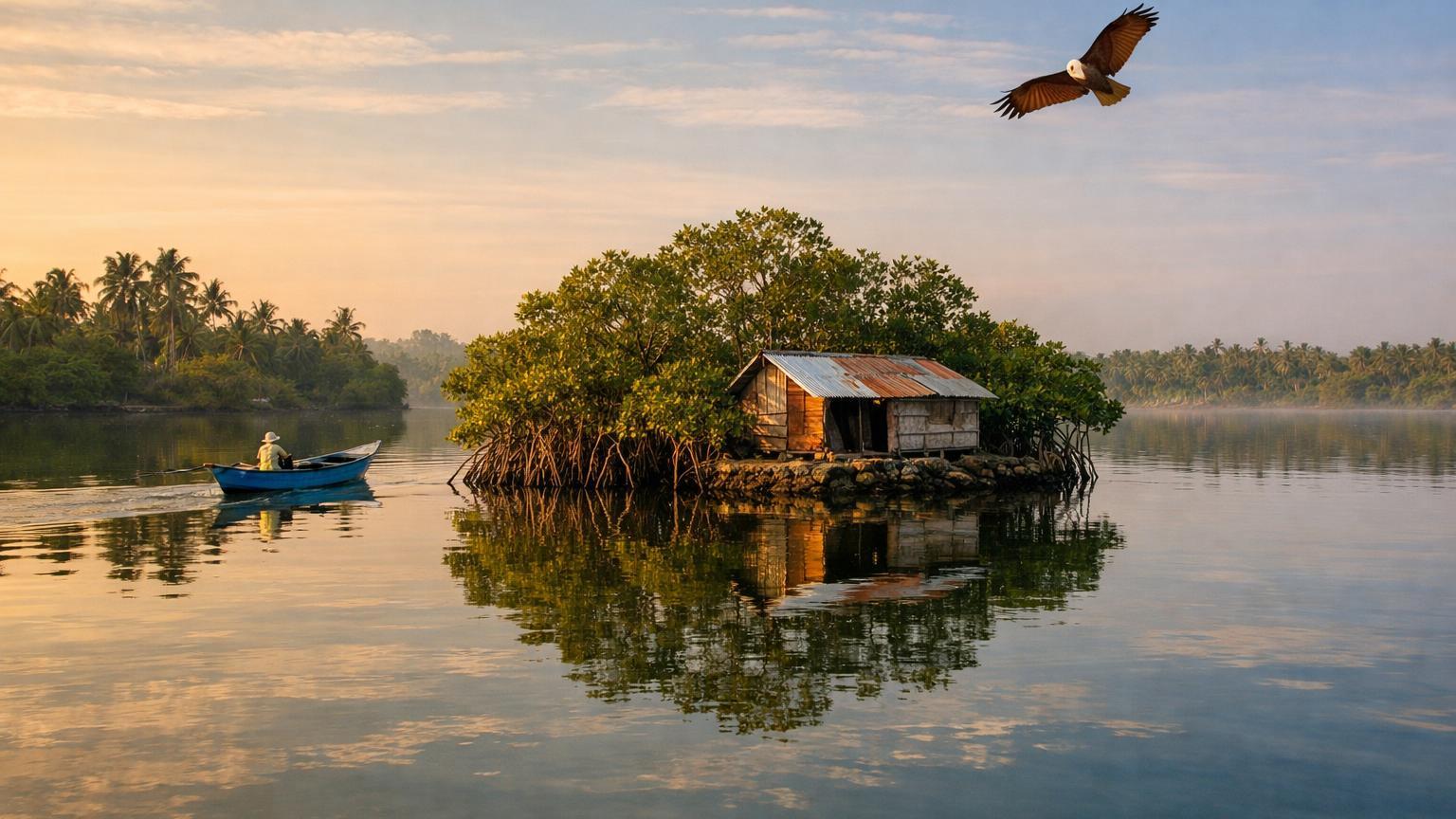
4. Lagoons, cinnamon islands and bird calls
Koggala is a sleepy stretch between Ahangama and Habaraduwa where the ocean beach is wide and the inland lake unrolls into mangroves and islets. Locals hop boats to tiny cinnamon farms and a lake‑temple island as herons, kingfishers and sea eagles patrol the air. It’s a gentle nature day that fits neatly between beach hours.
At the pier you can hire a small boat and skipper. Typical two‑hour trips cost around LKR 4,000–6,000 per boat as of 2026, with solo travelers sometimes quoted more and small groups paying less; always confirm route and inclusions before you push off[8][9]. Back by the sea, the spectacle of stilt fishermen often unfolds at golden hour. Watch quietly from shore, then walk the long beach to shake the cinnamon dust out of your sandals.
Good to know: Getting there: Koggala sits on the coastal highway and railway between Galle and Matara. Best time: December to March usually brings calmer seas and clearer lake days on the south coast[1]. Rough cost: Private lake safari commonly LKR 4,000–6,000 per boat for about two hours, 2026[8]. Insider tip: Ask your boatman to time a quick stop at Cinnamon Island when a peel is underway; the demo smells like Christmas.
5. A classic east‑coast duo: long sand and a reefed island
North of Trincomalee, Nilaveli stretches into a pale sweep of sand that feels far from everything. A few hundred strokes offshore sits Pigeon Island National Park, ringed by coral and patrolled by blacktip reef sharks and shoals of bright fish. Most visitors hire a small local boat from Nilaveli beach, snorkel the reefs, then picnic back on shore.
Expect to pay around LKR 4,000–6,000 in 2026 for a private return boat for the whole group; the national‑park ticket is a separate, government‑set charge, so check the day’s rate before you go[10][11]. Sea conditions vary with the monsoon, but in the May–September east‑coast window the water is generally clearest, mornings are glassier, and boatmen are on the beach early to match the tides and visibility.
Good to know: Getting there: Buses and taxis run to Nilaveli from Trincomalee town. Best time: May to September is the east‑coast dry season with calmer seas[1]. Rough cost: Private boat to Pigeon Island typically LKR 4,000–6,000 per boat in 2026, plus separate park entry[10][11]. Insider tip: Wear reef‑safe sunscreen and closed‑heel fins; the near‑shore coral can be shallow.
6. Where resorts face a sleepy village
Kalkudah is the quieter neighbour to Pasikudah’s resort curve. The bay runs long, with casuarina shade, fishing catamarans and soft evening light. Many visitors split days between the two: calm swims off Pasikudah’s shallows, then a tuk‑tuk to Kalkudah for sand to yourself and a beach cafe that still cooks to the day’s catch.
On the water, small operators run lagoon and near‑shore boat trips. In the Pasikudah–Kalkudah tourism zone, published figures list short lagoon rides at about LKR 3,500 and longer trips near LKR 6,000 as of 2025/26; on the sand, prices are posted and you can confirm duration before boarding[12]. The east coast’s best months align with its dry season, so plan for May to September if your dream day involves swimming until your fingers wrinkle.
Good to know: Getting there: Reach Kalkudah by road from Batticaloa; local tuk‑tuks shuttle between Kalkudah and Pasikudah beaches. Best time: May to September for the east coast[1]. Rough cost: Lagoon safari boats around LKR 3,500–6,000 per trip in 2026, depending on length[12]. Insider tip: Walk north from the main access at first light; fishermen land their catch and the beach stays quiet for hours.
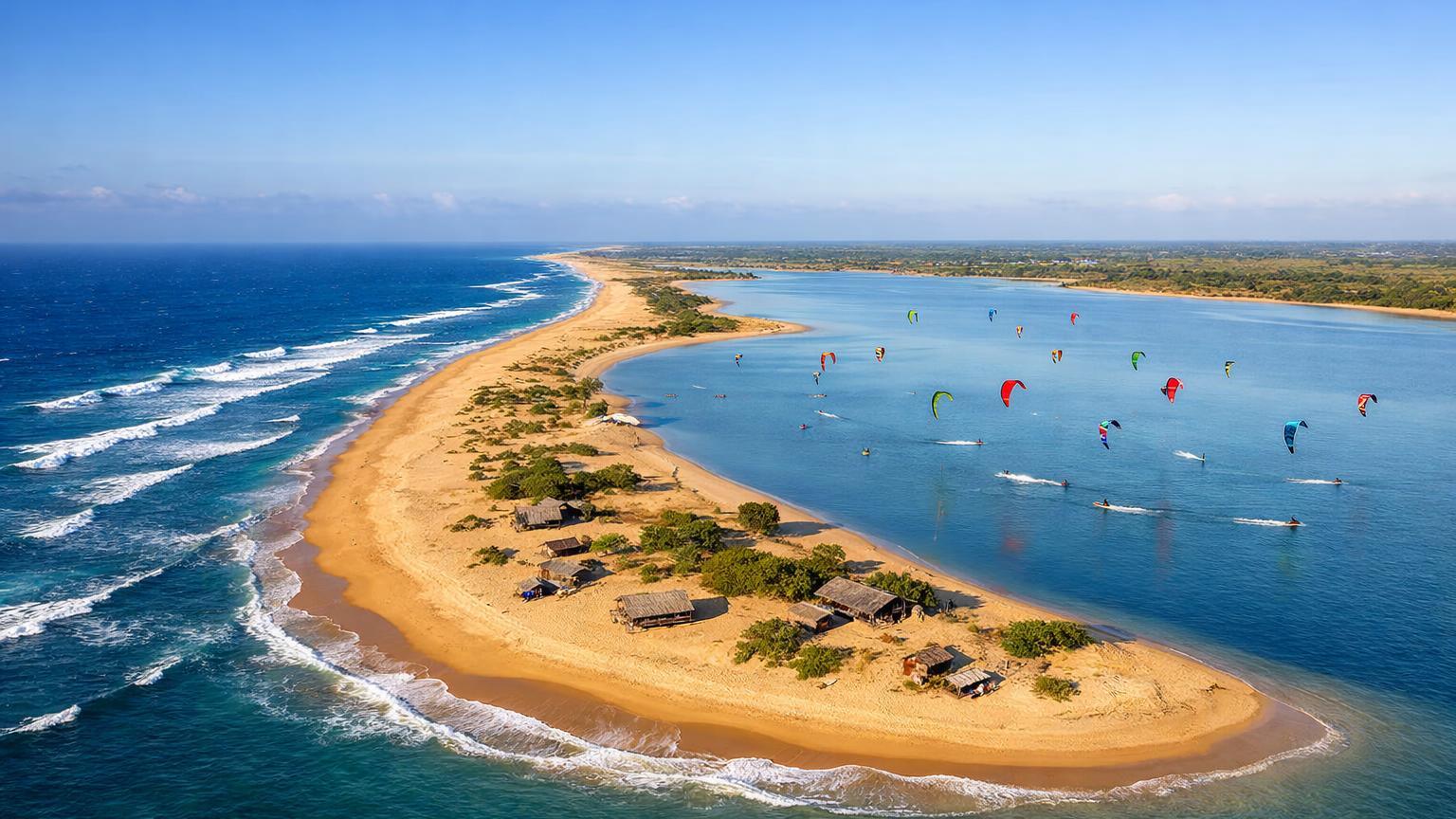
7. Wind, dolphins and sand‑spit sunsets
On Sri Lanka’s northwest peninsula, Kalpitiya strings together sandspits, a shallow lagoon and the Indian Ocean. Mornings often mean dolphin pods offshore; afternoons fill with colorful kites looping over the lagoon. It’s a simple, outdoorsy place, and one of the more easygoing Sri Lanka beach villages when you want equal parts activity and hush.
If you’re curious about kitesurfing, local schools run structured beginner courses and bundle‑and‑stay deals. For timing, the lighter December–March winds are beginner‑friendly, which also leaves mornings open for dolphin boats that typically depart around first light[13][14]. As of 2026, lesson‑and‑stay packages start from about €245 per person for 3 nights with group lessons at one lagoon‑side school; stand‑alone beginner courses are quoted around €320 at others, with all equipment included[15][13].
Good to know: Getting there: Drive from Colombo via Puttalam; most kite camps can arrange transfers. Best time: Two windy seasons; December–March is calmer for first lessons[13]. Rough cost: Beginner options range from lesson‑and‑stay packages from ~€245 per person to stand‑alone beginner courses around €320 in 2026[15][13]. Insider tip: Book a dawn dolphin trip on your first calm morning; wind and swell rise later.
Final thoughts
Sri Lanka beach villages reward unhurried days and a little seasonal savvy. Pick south or east by month, add one small splurge per stop, and you’ll have room to spread a towel and a story. Send a photo or two; your friends will cope.
Sources
- Marine Tourism in Sri Lanka: Full Report (SLTDA) ↩
- Southwest Monsoon 2026 Consensus Forecast (Disaster Management Centre, Sri Lanka) ↩
- Sri Lanka Railways – Revised train timetable notice (Dec 2025) ↩
- Talalla Retreat – 21st Anniversary Offer and Drop‑in Class Rates (2026) ↩
- Hiriketiya Surfing Guide – Typical 2026 board rental and lesson prices ↩
- Turtle Watch Rekawa – Visitor information and 2026 ticket prices ↩
- Nature Friends of Rekawa – Turtle Watch overview and nightly 8 pm start ↩
- Travel Ceylon Tours – Koggala Lake boat safari overview and typical pricing ↩
- Tripadvisor – Koggala Lake Boat Safari recent 2026 reviews quoting LKR prices ↩
- BYC.lk – Pigeon Island boat hire rates from Nilaveli (2026) ↩
- Department of Wildlife Conservation – ePermit instructions for national parks ↩
- Environmental & Social Management Framework, Tourism Zones – Pasikudah (2025/26 figures) ↩
- Margarita Kite School, Kalpitiya – Season notes (Dec–Mar for beginners) ↩
- The Sri Lankan Guideline – Kalpitiya beach guide (early‑morning dolphin boats) ↩
- Valampuri Resort, Kalpitiya – 2026 rates and lesson‑and‑stay offers ↩